
Sunday Scaries


I know of no other profession where there is such persistent and consistent dread for the start of each week. No matter how well students behave, or lessons go, come Sunday, there is a rising anxiety about school on Monday. Sometimes referred to as the Sunday Blues or Sunday Anxiety, this anticipatory stress of returning to the workweek grind is a normal hormonal response a nervous anticipation of stress.
My weekends are usually filled with all of the errands and chores I couldn’t do during the week: grocery shopping, mowing the lawn, cleaning the house, fixing the leaky faucet in the front bathroom. And as much as I try to avoid bringing work home with me, inevitably, I must grade and plan so that I’m ready for another week of school.
I realize that teachers are not the only ones with stressful jobs. Depending on which online survey you read, anywhere from 75% — 85% of Americans report having “really bad” Sunday night anxiety or dread over what to expect in the upcoming week. Many office workers know they eventually have to return to their cubicle and respond to the hundreds or thousands of unread email messages. Some worry about an upcoming or difficult meeting or a tyrannical boss. Still, others just hate their menial jobs.
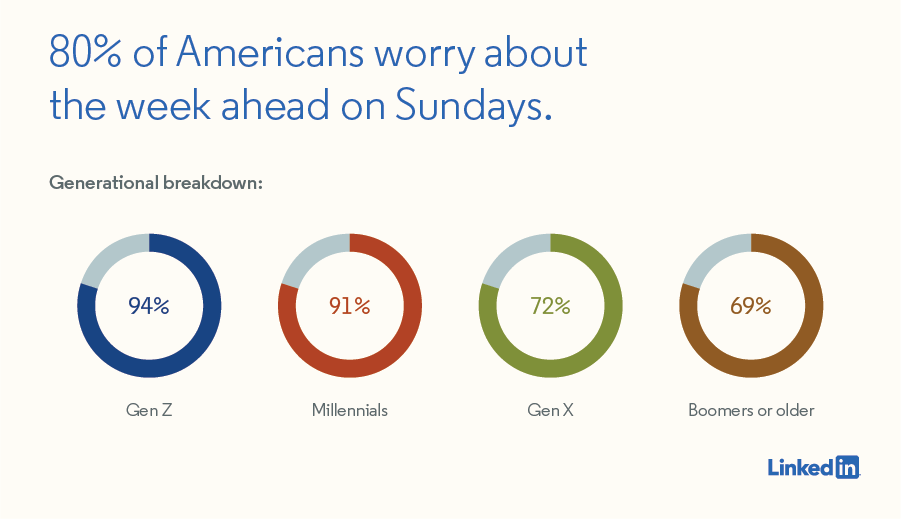
The vast majority of teachers, however, love being a teacher. They love working with students and being a part of their lives. They became teachers because they have a deep desire to connect with students and help them learn. This is what matters most. And so teachers endure the mandated curricula, huge class sizes, lack of financial resources, loss of pedagogic agency, the occasional angry emails from parents, late nights spent grading or holding parent-teacher conferences, lack of adequate support staff, and challenging students. Teachers endure the overwhelming pressure to help students make multiple years of growth, raise test scores, and fix all of society’s ills. Teachers are exhausted and the weekends don’t allow for much rest and recovery.
The longer I teach, the more eroded I feel year after year. In Demoralized: Why Teachers Leave the Profession They Love and How They Can Stay, Doris Santoro analyzes the pervasive professional dissatisfaction that challenges common explanations of teacher burnout. She interviews hundreds of educators and believes that having a moral center can be pivotal in guiding teacher actions and expectations on the job.
The process of demoralization occurs when pedagogical policies and school practices (such as high-stakes testing, mandated curriculum, and merit pay for teachers) threaten the ideals and values, the moral center, teachers bring to their work.
This cannot be fixed, however, by having more mentally tough teachers. Researchers Peter Clough, Doug Strycharczyk, and John Perry define mental toughness as “a set of attributes related to how people deal with challenges, stressors, and pressure.”1 Their model of mental toughness is structured around a “4 C’s” framework2:
Control: The extent to which individuals feel they are in control of their lives and emotions. High control means feeling able to influence outcomes and manage emotions effectively.
Commitment: The ability to set goals and consistently achieve them, demonstrating reliability, focus, and perseverance.
Challenge: The tendency to see challenges, change, and adversity as opportunities for growth rather than as threats. High challenge is associated with adaptability and a drive for personal development.
Confidence: The belief in one’s abilities and the inner strength to stand one’s ground, including both confidence in one’s skills and interpersonal confidence.
Not only do teachers feel a lack of control in public education, their commitment to the status quo is constantly questioned, the neverending challenges they face threaten their abilities to do their jobs, and eventually, their confidence wanes. Teachers must follow directives articulated by their school district, state, and federal governing bodies, while having their professional opinions ignored. Teachers are expected to follow policies they believe “outwardly harm children or violate the trust that they have established with students.”3 A constant barrage of you’re not doing enough and we don’t trust your opinion erodes teachers’ moral centers; why they became teachers.
All of this, week after week, for 180+ days. It isn’t surprising then, that teachers are fatigued and experience Sunday Blues. This constant pressure takes a toll on teachers, mentally and physically, including chronic stress, emotional dysregulation, cognitive depletion, memory issues, and eventually burnout. While Santoro believes teacher burnout is reversible, if educators can tap into authentic professional communities, I wonder if, knowing how unsustainable the stressors of teaching are, I should focus more on how I deliberately recover instead of how I manage the melee of teaching.
Deliberately Recovering
I had last week off. Our Fall Break occurs just before the end of the first trimester, before final grades and report cards are due, and parent conferences begin. It is a calm before a very hectic late fall, early winter storm. At the start of the week, my eldest son, recently graduated from Marine Corps boot camp, was briefly home before leaving again to his School of Infantry. Knowing that he had to leave early Tuesday morning, I willed myself to disconnect from work as quickly as possible. I wanted to be present with him, not carrying any of my previous stressors home with me. We hung out playing board games, watching movies, running errands, and talking. Doing a few important things that matter to me was the most rest I have felt in a while.
A curious thing occurred after he left; teacher-fatigue and foreboding set in. Instead of the Sunday Scaries, I experienced prolonged dread the rest of the week. I read for distraction and went on a few walks. But, mostly I slept and fretted. I was not looking forward to resuming our 15 Day Challenge (and planning the next one). I was dreading the micro misbehaviors and daily emotional outbursts I was certain to expect. I could feel my anxiety rise, thinking about finalizing grades for the first trimester, scheduling parent conferences, and sitting through more standardized PLC meetings. How am I going to get through this school year if I’m already feeling this much worry?
I went for a walk. I went to the public library and checked out more books to add to my TBR pile.4 I watched Méringue Week on The Great British Bake Off. I took a nap. I read a novel. I did all of the things that I know bring me joy and calm my anxiety. I did my best to Lock-In and Lock-Through, Brené Brown’s metaphor for the deliberate recovery skills needed to reenter home after a challenging day at work. It helped some.
Most importantly, I reflected on a quote I heard from
.Heaviness begets heaviness, and interrupting that cycle is the best path forward.
Marcus Luther, The Broken Copier Podcast
Interrupting the heaviness I feel, thinking about returning to work after break, requires that I find my strong ground and remember what I love about teaching. I spent the remainder of my break writing down what I’m looking forward to on Monday. I’m excited to greet my students at the doorway. I’m eager to listen to them share about their Fall Break during our Family Meeting. I’m looking forward to playing two new albums I purchased. I’m excited to read a new novel aloud to my students. I want to see my students because, despite all of the challenges I face as a public school teacher, I love my students. I love teaching.
The human capacity for finding strong ground depends on the ability to be both tough and tender, to be able to lock in and lock through.
Brené Brown, Strong Ground: The Lessons of Daring Leadership, the Tenacity of Paradox, and the Wisdom of the Human Spirit
I have about 20 more Sunday Scaries until June. I will keep resisting the standardization of my pedagogical practice and classroom learning experiences. I plan to enter Monday with
’s advice in my head: do less that matters more. My moral center is strong, and if I am to endure until June, I must focus on what learning really looks like, and find ways to be tough with the system and tender with myself and my students. My antidote to the Sunday Scaries: find the good in our classroom, amplify our collective humanity wherever I can, and live my values every day.Have a great week!
— Adrian
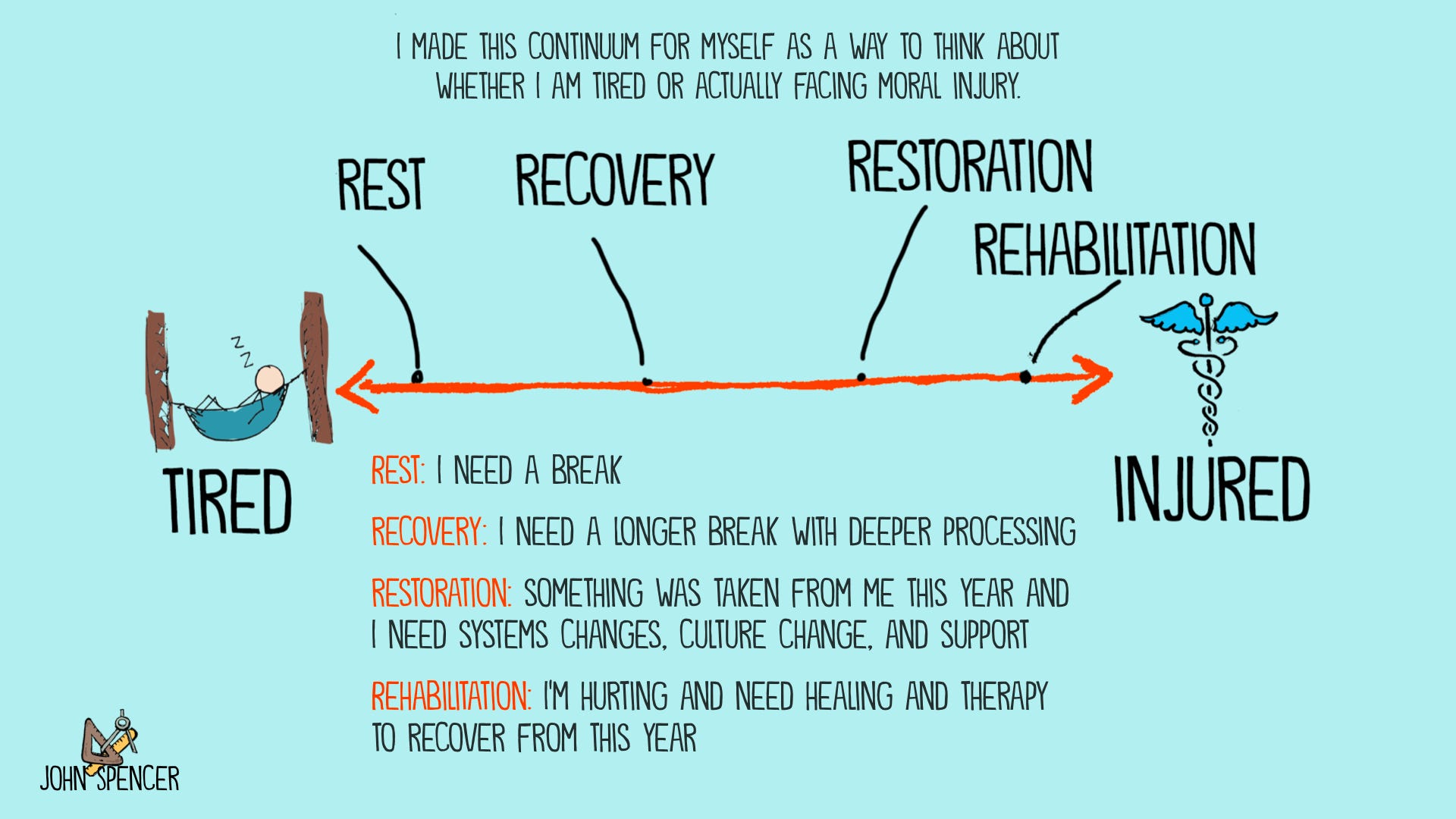
When you think of what you need this year, do you need rest, recovery, restoration, or rehabilitation? What does your weekend deliberate recovery look like? Please share!
Resources
How to beat the sunday night blues and the sunday scaries work anxiety | headspace
I wouldn’t say I am proficient in medatiting, but I do meditate with my students every afternoon. It has helped me be more mindful and deal with my worrying thoughts about the future. This video mediation is great!
The 'Sunday Scaries' Are Real — This is Why
I have found these tips to be very helpful in combating my Sunday Blues.

 Tiktok failed to load.
Enable 3rd party cookies or use another browser
Mel Robbins offers three things she does to combat her anxiety about the upcoming week. I can personally attest to each of these; they really help!
Finding Rest and Recovery After a Hard Year | John Spencer
I’ve referenced John Spencer’s rest and recovery graphic before. I tend to revisit it when I begin feeling overly cynical or depressed. John wrote this blog post during the pandemic, at the end of the school year before summer break, but so much of it is still applicable today. I highly recommend his podcast episode!
I have an emotional connection to my teaching job. I love teaching! I may not like what teaching currently looks and feels like, but I love being a teacher. This video reminds me that I have right to love my job, even if it means changing schools.
When we are loved, we don’t feel compelled to work harder than the task at hand requires. We don’t need to accumulate beyond measure; we are already titans in another person’s eyes. This School of Life video has me rethinking what I’m truly looking for in a teaching position.

In this episode of
, reflects on a simple, daily habit that helps him appreciate the good things about teaching in the classroom.
Doug Strycharczyk, Peter Clough, and John Perry, Chapter 2. Developing Mental Toughness: Strategies to Improve Performance, Resilience and Wellbeing in Individuals and Organizations, 3rd ed. (Kogan Page, 2021).
This list comes directly from Dr. Brené Brown’s book, Strong Ground, as reference to Doug Strycharczyk, Peter Clough, and John Perry’s Developing Mental Toughness.
Santoro, D. A. (2018). Demoralized: Why teachers leave the profession they love and how they can stay. Harvard Education Press.
This was a good one, Adrian. Taking some nuggets out of it.
I really like people who have passion for their profession especially teaching. https://topaitool.io