
The Realistic Position

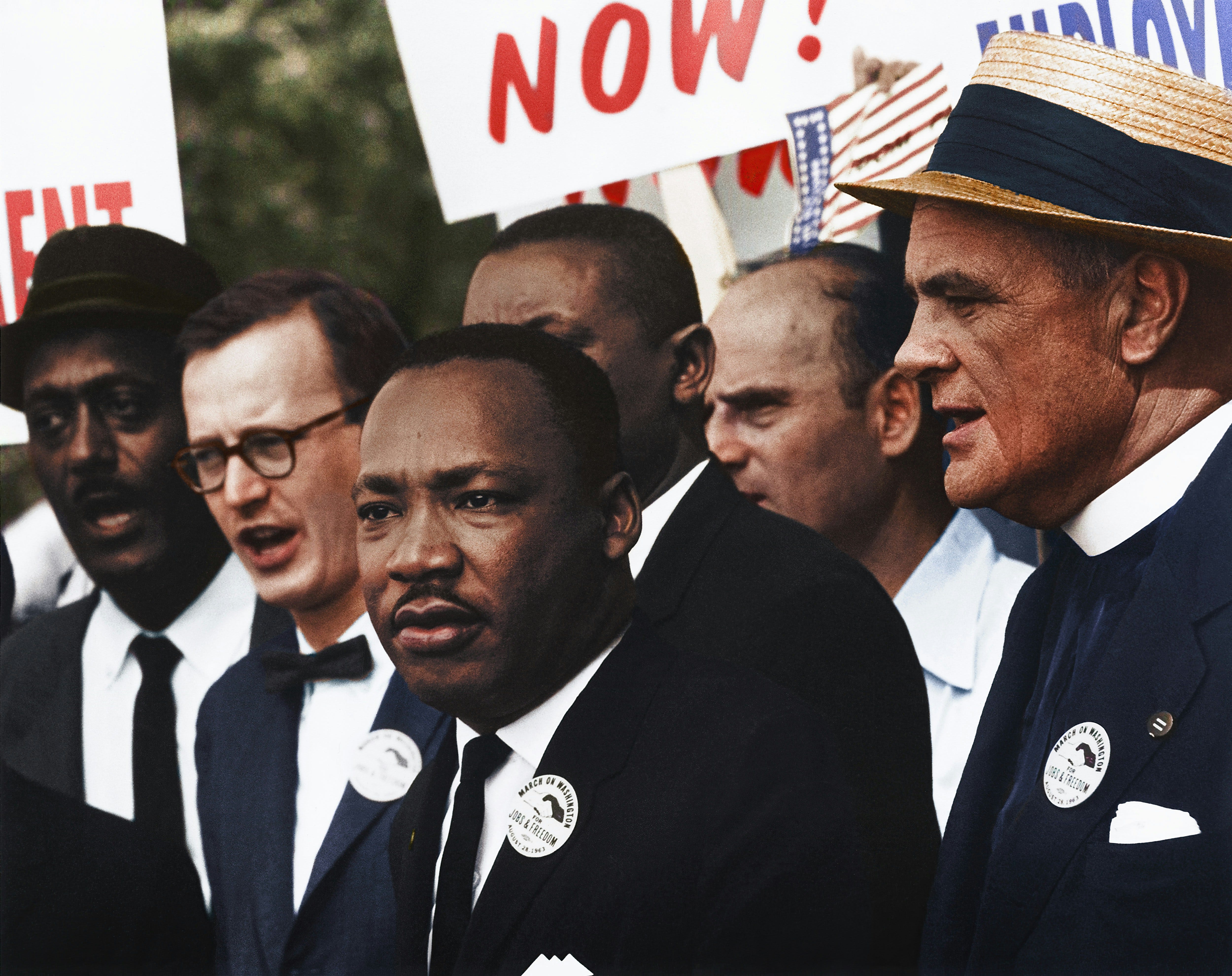
On May 23, 1962, the Reverend Dr. Martin Luther King, Jr. was invited to Dartmouth College to give a lecture on the state of the American Civil Rights Movement. This lecture was part of the University’s Great Issues Course, a core academic component for all graduating seniors of the classes of 1947 through 1966. On a cool, late-spring Wednesday evening, Dr. King addressed an overflow audience of students and Upper Valley residents who had come to 105 Dartmouth Hall to hear the reverend speak.
Dr. King opens with, as he describes them, the basic attitudes toward the question of progress of race relations in the United States: extreme optimism and pessimism:
The extreme optimist would contend that we have made great strides in the area of race relations and he will point proudly to the gains that have been made in the area of civil rights over the last few decades. The extreme pessimist in the area of race relations would contend that we have made only minor strides over the last few years. And he would argue that the deep rumblings of discontent from the South, the presence of federal troops in Little Rock, Arkansas, the resurgence of the Ku Klux Klan and the birth of white citizens councils are all indicative of the fact that we are going backwards instead of forwards and that we are creating many more problems than we are solving. From this the extreme pessimist would conclude that there can be no real progress in the area of race relations.
Dr. King then describes how much progress has indeed been made since the first slaves landed in 1619. And as Dr. King was wont to do during his speeches, he masterfully holds listeners and expounds on not only the progress that has been made, but how much more progress is still necessary before reaching our collective goal in creating a truly egalitarian society. Or as King says, the creation of a great America.
However, Dr. King does not want to give the audience the impression of “dangerous optimism”, an illusion where the problems of racism and prejudice appear to be finally solved. Dr. King, as always, clearly speaks the difficult truths while remaining hopeful for the “bright and glittering daybreak of freedom and justice.”
On May 25, 2020, 58 years after Dr. King reminded his audience that there was still a long, long way to go for freedom and justice, a white police officer in Minneapolis, Minnesota murdered George Floyd. Floyd’s brutal murder globally surged the Black Lives Matter movement, created in 2013 by Alicia Garza, Patrisse Cullors, and Opal Tometi, in response to the acquittal of George Zimmerman for the 2012 shooting death of unarmed Black teenager, Trayvon Martin. For me, being a white male, reading headline after headline of unnecessary deaths of Black men, women, and children at the hands of white police officers, felt surreal and sickening. Watching peaceful protests gain momentum, especially after the deaths of Michael Brown and Eric Garner in 2014, I felt exhaustive hope, wondering is this the tipping point?
With every new catastrophe since: the 2016 election, protests and riots, the COVID-19 pandemic, the January 6 insurrection, the 2024 election, and now ICE terrorizing communities, I keep asking myself, what is it going to take to effect real change? When will we “emerge from the bleak and desolate midnight of man’s inhumanity to man?”
Three months into the COVID-19 lockdown, hearing the news of Floyd’s murder and watching protests, I became angry. Incensed, and with no immediate outlet, I wrote a letter to white people naming my fatigue and anger, acknowledging my privilege, and calling for unity. I had no plans for this letter; I just needed to get the words out of my head. Five-and-a-half years later, looking for guidance and still experiencing wearisome anger, I reread Dr. King’s Towards Freedom lecture at Dartmouth College.
Men often hate each other because they fear each other, and they fear each other because they don’t know each other. They don’t know each other because they can’t communicate with each other, and they can’t communicate with each other because they are separated from each other. And I think one of the great tragedies of life is that more often men seek to live in monologue rather than dialogue. And there is the danger that this will happen in society. So there is need for leadership from the people of goodwill in the white South.
Dr. Martin Luther King Jr., Dartmouth College, May 23, 1962
I believe we are witnessing the result of years of mobilized fear and hate mongering. Instead of leadership from people of goodwill that King called for nearly 60 years ago, we are enduring authoritarian extreme nationalism, a dictatorial leader, forcible suppression of any opposition, and militarism. No political dissent is allowed. Military power and violence is praised over human dignity and nonviolent protesting.
Last year, on Martin Luther King Jr. Day, I wrote a love letter to white educators, reflecting on my white identity and role as a teacher figuring out how to show up more human for my students. In the year since, I have experienced my teacher agency shrink and then come home to horrific news of innocent neighbors being murdered in Minneapolis. At school, I navigate absurd policies. At home, I brace for a possible military takeover of Greenland. Many students are afraid to come to school because they fear their families will be taken by ICE. I am afraid that I am not doing enough to motivate my students to read novels and complete their classwork. It is hard to concentrate on teaching while waiting for the Epstein files to be released. When I began teaching the fifth grade, I never thought I would need to define the word fascism and explain to my students what “the day of retribution and reckoning is coming” means. Family meetings now consist of me allaying my students’ fears and explaining the legal powers of ICE agents. I feel exhausted and despondent.
At Dartmouth College, Dr. King explains that while extreme optimism and pessimism are understandable, it is important not to remain stuck in either.
Now it is interesting to notice that the extreme optimist and the extreme pessimist agree on at least one point: they both feel that we must sit down and do nothing in the area of race relations. The extreme optimist says, “Do nothing because integration is inevitable.” The extreme pessimist says, “Do nothing because integration is impossible.”
Even in my most grim states of overwhelm, doing nothing is never an option. Every day, the morning bell rings and my students expect me to be standing in the doorway with a smile on my face, cup of tea in my hand, and a fistbump greeting ready. I never know what to expect as my students round the corner. Some arrive sleepy-eyed, but amiable; others arrive tired and grumpy, and a few come to class aggressive and angry. But the day goes on because it has to. Angela Stockman recently wrote about how important the routine and even mundane aspects of school life are for students. Right now, “building and protecting all that’s boring” for my students is what I can do. I can guarantee that every Wednesday in mathematics class, we will be taking notes and reviewing concepts from the week’s thinking tasks. Every morning, students know there will be music playing while they unpack their backpacks and settle in for the day.
The Realistic Position
Dr. King does not stop at either end of the hope spectrum. Being a white, male educator, I have no idea how he continuously exhibited such fortitude and steadfastness. I can only image the fatigue he felt, and yet, he never gave up. King remained a realist during the Civil Rights Movement because there is movement in realism. There may be progress, but the problem is not solved. He explains:
But there is a third position that can be taken; namely, the realistic position. The realist in the area of race relations seeks to combine the truths of two opposites while avoiding the extremes of both. So the realist would agree with the optimist that we have come a long, long way but he would balance this by agreeing with the pessimist that we have a long, long way to go before this problem is solved. We have made significant strides. We have come a long, long way. But we have a long, long way to go.
Teachers are incredible at combining opposite truths while avoiding the extremes of both. We are accustomed to impossible expectations and under-resourced classrooms. For however much progress we may make with one student, there is always a long way to go. Good days, where concepts click, are quickly followed by lessons that bomb and recalcitrant students who resist all efforts to learn. Even after a challenging week, students can surprise you with a sweet gesture and a clean classroom. Teachers are experienced realists; we keep going no matter if the world burns down or shuts down.
On this Martin Luther King Jr. Day, I remind myself that, unfortunately, our world still has a very long, long way to go before we reach King’s “bright and glittering daybreak of freedom and justice.” And while I may not be able to be on the front lines in Minneapolis, supporting my neighbors who are cruelly abused and demeaned, I can continue teaching my students how to communicate with each other. We are a familial classroom where we include, care for, and dialogue with each other. We center love and understanding, not fear and hate. As King states toward the end of his lecture, that agape (ἀγάπη), the Greek word for a profound, selfless, unconditional love, is the “understanding, creative, redemptive goodwill for all men. It is an overflowing love which seeks nothing in return.” He continues:
Love is understanding, creative, redemptive goodwill for all men. This is what nonviolence says. It says that the love ethic is a possibility in the struggle for freedom and human dignity.
Teaching requires agape; it is this selfless, unconditional service to our students that helps children learn and grow. As Dartmouth College Senior Diversity Officer, Shontay Delalue, reminds us, “A big part of what Dr. King embodied was service to others, and service has no bounds. Service is not tied to one’s race, ethnicity, nationality, religion. It cuts across all those areas. It is about being in community with one another and making our community stronger. And you do that through acts of service.” On this Martin Luther King Jr. Day, I am recommitting to my practice revolutionary love. For my students I am an agent of kindness, not authoritarianism. My work is to make my classroom community stronger every single day. If I make any progress, it will be in helping my students be torchbearers of love and kindness.
Have a great week!
— Adrian
Resources
Towards Freedom: A multimedia presentation of the speech the Reverend Dr. Martin Luther King, Jr. delivered at Dartmouth on May 23, 1962.
MLK: Speeches, Sermons, Essays, & Interviews | Cross Cultural Solidarity
I am always surprised by how few of my students have actually listened to any of Dr. King’s speeches. Cross Cultural Solidarity has collected many of his sermons, interviews, and essays for use in the classroom.
I have included many resources below from Learning for Justice (formally Teaching Tolerance). I have been using their lessons for over 20 years. They have a ton of free resources, including podcasts, teaching strategies, and film kits.
Martin Luther King Jr.: Resources from 1440
The website, 1440, has curated a long list of resources for MLK. There is plenty here to explore with and without your students,.
Teaching and Learning About Martin Luther King Jr. With The New York Times
Below, we’ve chosen both recent pieces as well as pieces from the Times archives published during Dr. King’s lifetime. We also suggest several teaching ideas for connecting his message with our world today.
9 Resources for Teaching about MLK's Legacy | Facing History & Ourselves
Facing History & Ourselves is another go-to website for teaching resources. I have used many of their resources for teaching social studies, reading, and writing. These nine resources help you reflect on your own teaching practices, teach the history of the Civil Rights Movement, and explore contemporary issues around racial justice and democracy in the United States.
A Time for Justice: America's Civil Rights Movement | Learning for Justice
A Time for Justice is a 30-page PDF with five lessons for teaching the Civil Rights Movement. Each lesson is aligned to history standards. I have modified Lessons 1-3 for my fifth-graders and they remain some of the best classroom learning experiences I have had in my career.
Injustice on our Plates: Immigrant Women in the U.S. Food Industry | Learning for Justice
Injustice on our Plates is another PDF from Learning for Justice. This document has seven theme that reflect interviews from 150 undocumented workers. Each theme also includes student objectives, essential questions, and a learning activity In Their Own Words. I have used this with my students and their realizations that all of their food comes from the labor of an undocumented workers is powerful.
Printable Rights Cards in Multiple Languages
The Denver Public School District created these cards for use in their school communities.
Teach Truth Campaign: At Every Rally | Zinn Education Project
I have been a fan of the Zinn Education Project for many years. This link has a free Teach, Vote, Resist, Organize poster. You can also download more of their posters or make your own.
8 Resources for Teaching Immigration | Facing History & Ourselves
These resources are designed to help educators address immigration in the classroom with curiosity and confidence. I have only just scratched the surface with teaching immigration in my classroom. My favorite unit is My Part of the Story: Exploring Identity in the United States.
Too often, I think, we assume that the mundane is meaningless. I'm listening to far too many experts in the field, scholars with reach, suggest that school is not enticing to kids and so, without value. And maybe we were privileged enough to begin heading down that path a decade ago, but right now? School is steady and predictable and so hopeful. When we teach a single new concept, we're shining a light in a whole lot of darkness. "Look here," we're saying. "This thing exists. It happens. It's happening. And it's connected to this other stuff." Learning is what it means to be alive, and it turns our head in the direction of everything that is still factual and that pushes our existence forward...or gives us a shared history. Thanks for tagging me in, Adrian. This is powerful stuff worth reading as we circle the rim of who knows what right now.
This was a great read with some really good reminders! Taking the kindness with me into the classroom tomorrow!