
Tolle lege
Rebuilding my classroom library.


My early classroom had more Chromebooks and comic books that physical novels. It was the heyday of the 21st century classroom with one-to-one devices and paperless learning powered by technology. My classroom library was a mishmash of hand-me-down books that I inherited from retiring teachers. One summer, I bought a box of picture books at a garage sale. Aside from comic books, I was not much of a reader, and definitely not discerning: any and all free books found a place on my shelves. Many were dated or had taterted covers. There were only a few titles I knew anything about; I had not read the vast majority of novels. I leaned on my more experienced colleagues to help me teach literacy. There were class sets of novels in the storage room, so I taught whichever novels they taught. Bud, Not Buddy by Christopher Paul Curtis; My Brother Sam is Dead by James & Christopher Collier; Tuck Everlasting by Natalie Babbitt. When students needed a book to read, they mostly went to the school’s library; a few picked through my lackluster selection for familiar titles.
One summer, I read Adventures in Graphica: Using Comics and Graphic Novels to Teach Comprehension by Terry Thompson1. Thompson, a former literacy coach, was having great success using comic books and graphic novels to teach reluctant readers. I was a reluctant reader, and loved comic books, too.2 Like with most pedagogies back then, I dove in. I searched my basement and found my old Superman comic collection and brought them to school. I went to local comic book stores and bought multiple copies of dollar-comics for use in my small-group reading intervention. I became a graphica zealot, proselytizing to students, parents, and teachers the benefits of using comic literature to teach critical thinking skills and reading strategies. I created interactive whiteboard lessons for reading strategies that included an introduction on how to read comics so that every student had common comic literature schema. Over the summer, I volunteered to lead a panel discussion at Denver’s first annual Comic Con on using comics in the classroom and sharing recommendations for teachers. I even wrote online book reviews for graphic novels and how to use them in the classroom.
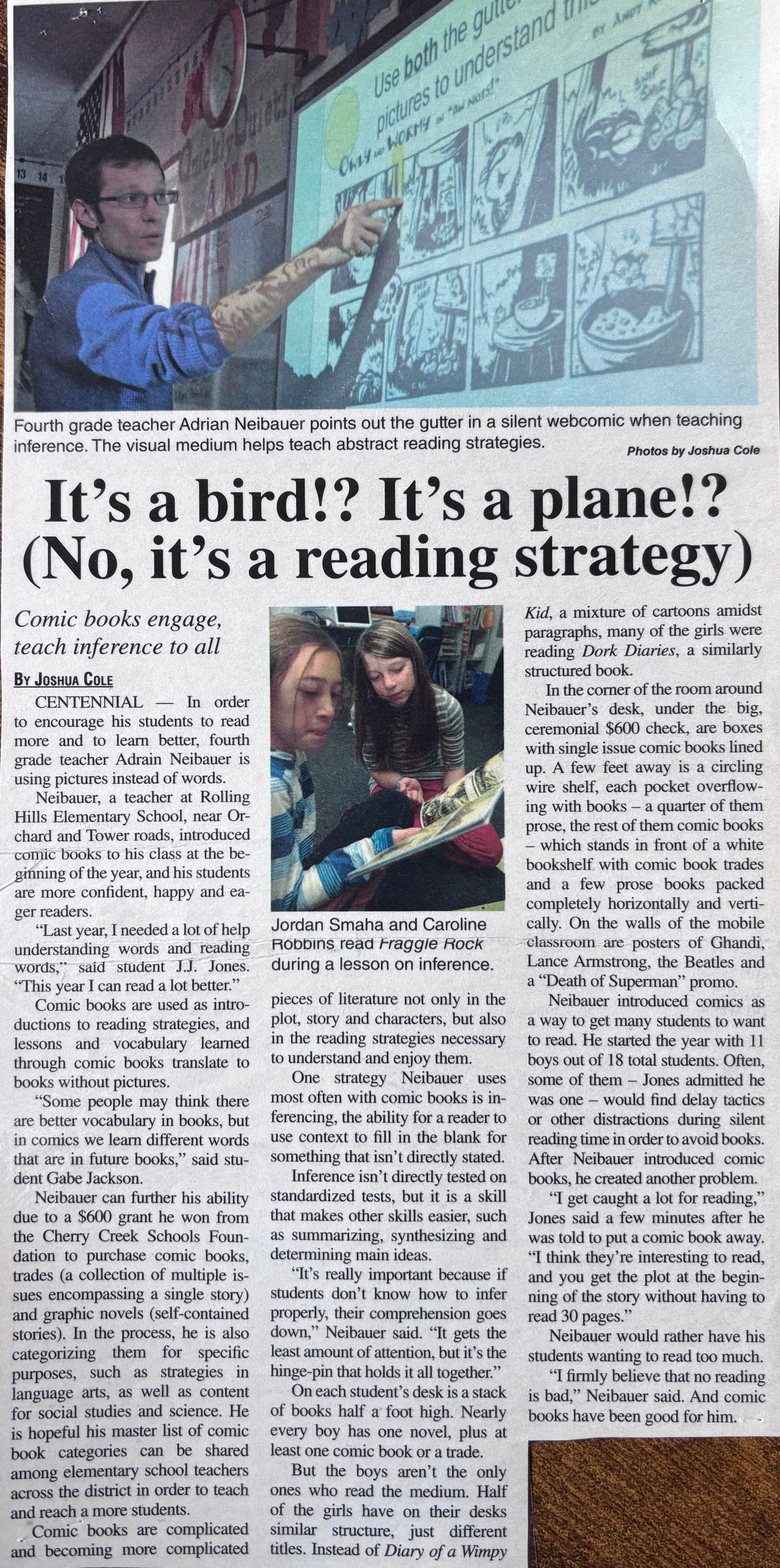
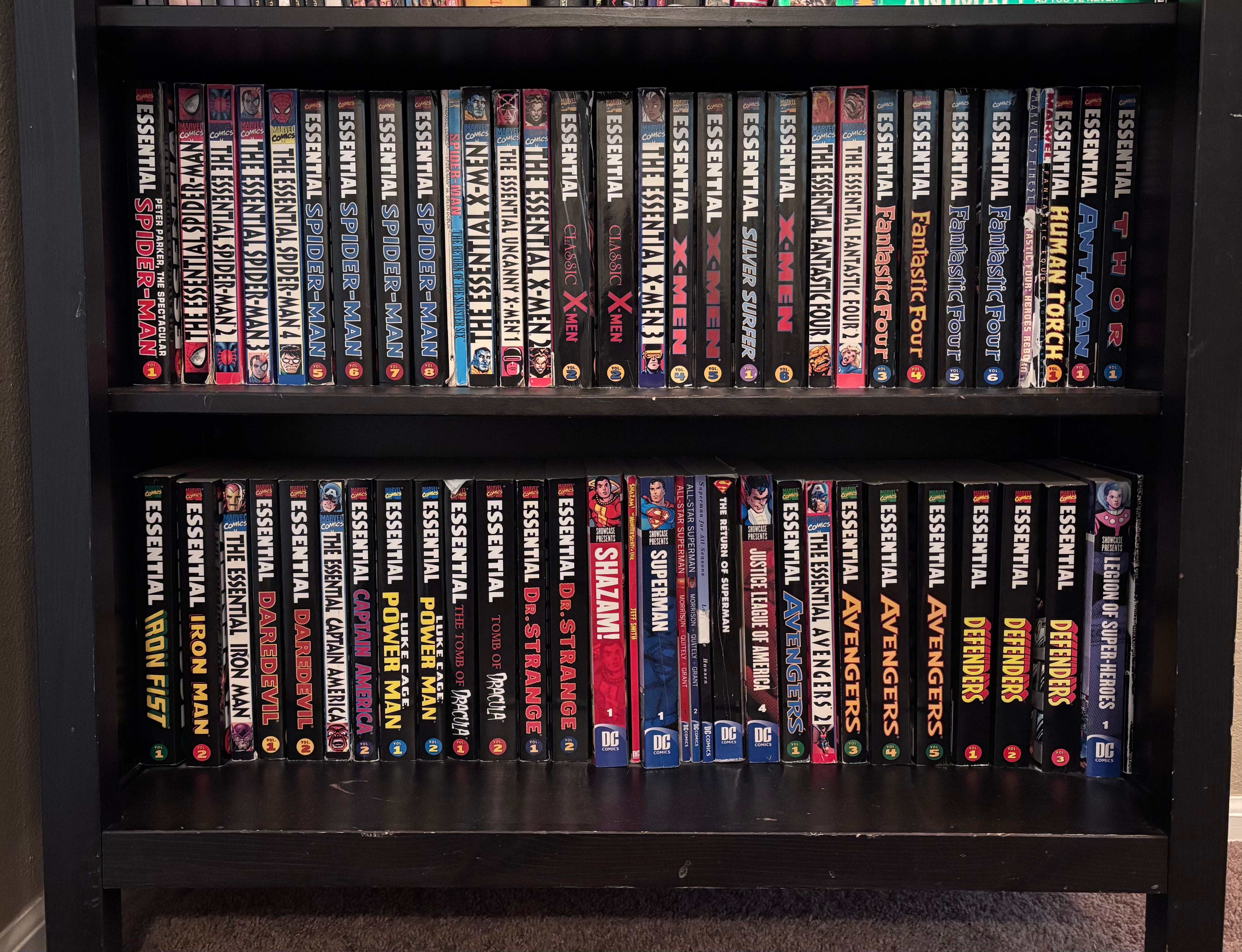
I quickly gained a reputation as the comic book teacher3. If, as Art Spiegelman says, “comics are a gateway drug to literacy”, I was dealing my students as many comics and graphic novels as possible to get them reading. By the time I left the classroom, I had amassed hundreds of graphic novels (including The Essential Marvel series) and had an old rotating magazine holder that I updated every month with new comics. I was giving my students anything and everything to read. Instead of going to the school library, students checked out my comics and graphic novels from our class library. It was an exciting time. I felt like I was doing good work, and my students were reading.
A Changing Tide
The excitement I saw in my classroom seemed to permeate everywhere. Graphic novels were quickly gaining popularity as legitimate literature. Serious graphic novels, like Art Spiegelman's Holocaust narrative Maus, which won the Pulitzer Prize in 1992, Persepolis by Marjane Satrapi (2000), and American Born Chinese by Gene Luen Yang (2006) were added to curriculum reading lists. In 2005, Scholastic launched its Graphix imprint with Jeff Smith's Bone4 and later Raina Telgemeier's Smile in 2010. In 2009, The Young Adult Library Services Association (YALSA) published a Great Graphic Novels for Teens list, providing a vetted resource guide for educators. The Common Core State Standards encouraged teaching multimodal literacies. Graphic novels were becoming permanent fixtures in elementary and middle school classrooms.
I began noticing a change in students’ reading habits: many students, especially boys, were either starting a novel, and then losing interest about a third of the way through, or opting for comic books and graphic novels altogether. At first, this did not pose any problems. I prided myself on letting my student read whatever they wanted; however, I was disappointed in the increasingly dismal selection being offered. At the Scholastic Book fair, shorter graphic novels were crowding out longer novels. Touted as “high-interest” books, the quality of graphic novels started to deteriorate toward enshitified content over complex storylines. Instead of LOtR-style narratives or coming-of-age stories or rich stories about immigrant experiences, publishers started pumping out myriad graphic novel sequels and movie novelizations, flattening beloved characters and turning plots so formulaic, they became cliché.

Students were now choosing highly processed trash instead of lovingly created books. In adults’ desperate attempt to get more children reading, they began offering junk food books. Book fair selections resembled gas stations with shelves of cheaply made, poor quality junk that tastes good, but leaves the reader feeling unsatiated. And given the choice between carrots and Takis, most students were choosing the junk. Publishers like Scholastic are a for-profit organizations; they rely on what costs the least to produce and makes the most money (characters like Bluey or Paw Patrol; games like Minecraft, Roblox; and internet content like YouTube or TikTok). These obvious cash grabs contained sloppy story lines and computer-generated illustrations. As the supply for junky books increased, so too did the demand.
And now with AI, the proliferation of slop has increased exponentially. Geisel award-winning, children’s book author and illustrator, Kaz Windess, laments over the current state of affairs in print and online publishing.
“Ai-generated kids books are an epidemic to the point that Amazon has limited the number of books you can publish to three per day. THREE! Our kids deserve so much better. They deserve human-created books by people who care enough about them to spend the time to write and illustrate those stories.”5


When cheap comics and graphic novels are categorized alongside creative, well-written graphica, the entire genre is denigrated. When Jeff Kinney wrote Diary of a Wimpy Kid, he revolutionized children's literature by blending text with stick-figure comics, creating a new hybrid novel format. The character, Greg Heffley, is a morally gray, cynical anti-hero instead of a perfect protagonist. This was (and still is) relatable to reluctant readers. Likewise, Dav Pilkey, who struggled with ADHD and dyslexia as a child, wrote Captain Underpants and Dog Man for those children who, like him, had difficulty reading. His books offer creative and clever humor using unapologetically short sentences so children with reading disabilities can proudly claim an identity as a reader. The graphic novel series, Amulet by Kazu Kibuishi, is a gorgeous blend of science fiction and fantasy. Kibuishi creates stunning cinematic artwork and writes complex stories with mature themes. Raina Telgemeier’s Smile, transformed the comics industry by legitimizing relatable and heartfelt autobiographical comics for tweens. New Kid by Jerry Craft has won the Coretta Scott King Author Award and the Kirkus Prize. His development of the book’s protagonist, Jordan Banks, is a welcomed addition to children’s literature. Banks is an aspiring Black cartoonist sent to a predominately white private school. He navigates microaggressions and fitting it with his friends while developing his own identity through his love of art and drawing.
Anyone who writes down to children is simply wasting his time. You have to write up, not down. Children are demanding. They are the most attentive, curious, eager, observant, sensitive, quick, and generally congenial readers on earth… Children are game for anything. I throw them hard words and they backhand them across the net.
E.B. White
Unfortunately, these examples are now the minority in classrooms and book fairs. As publishers continue to print shorter books, even middle-grade novels are disappearing from classroom bookshelves and libraries because they are deemed “too long.” There is now a decline in text complexity and the variety of novels offered. The Scholastic Book Fair, for example, offers a meager selection. Instead of Newbery Award winning novels, students buy tchotchkes. It is clear that publishers like Scholastic no longer make money on well-written literature because they keep pumping out short, simple graphic novels and less challenging, less diverse books. Internet ephemera sells.
As a teacher, it does not matter to me whether my students are reading graphic novels or Greek mythology; comic books or canon. I always want to offer students quality literature. I want bookshelves with variety; books that increase students’ attention and expands their vocabularies. Reading diversely and deeply is the anlage of intellectual, emotional, and spiritual human development. It is central to everything. If my students are to grow, I must help them, as Ruth Gaskovski says, “restore [their] deep reading circuits and rediscover the joy and myriad benefits of reading fiction.”
To read fiction is to be a literary rebel in an age when most are surrendering to digital slop.
Rebuilding my Classroom Library
When I left the classroom, I left behind my entire library. I did not know when, or if, I might return. In the six years I was away, our school district spent millions renovating school libraries, rebranding them as innovation spaces. Flexible seating, workbenches, and whiteboards replaced full-time librarians and bookshelves. Many school libraries reduced their physical book circulation by two-thirds to make room for project-based learning and makerspace supplies. These beautiful new spaces encouraged collaboration, creativity, and innovation. There was plenty of space dedicated for technology and STEM projects, and not much left over for finding and reading a good book. Libraries were no longer sanctuaries of literature where dedicated librarians would recommend good books and students could find cozy nooks to read in.
It has been eleven years since that first Chromebook and comic book classroom. I returned to teaching during the pandemic, and have spent the last six years rebuilding my pedagogical practice. I shed my old technology-heavy habits and have slowly accumulated more physical pedagogical practices. Computers now live in the corner of my classroom; notebooks and novels are central for student learning. My book collection is small, but when I go looking in neighboring classrooms for reading recommendations, I find, to my horror, that novels have largely disappeared from their bookshelves. I have walked into many classrooms with no books for students to read. Teachers teach from textbooks and students are encouraged to read ebooks.
Every school year, I find that more and more of my students do not read for pleasure. I used to cajole the few students who avoided reading with high-quality comic books and graphic novels. Now, I beg my class to find a book, any book, to quietly read. My selection may be small, but over the years, I have cultivated and collected good books of high quality. Our local public library has donated dozens of books, curated recommended reading lists, and have come to school to give book talks on new books.
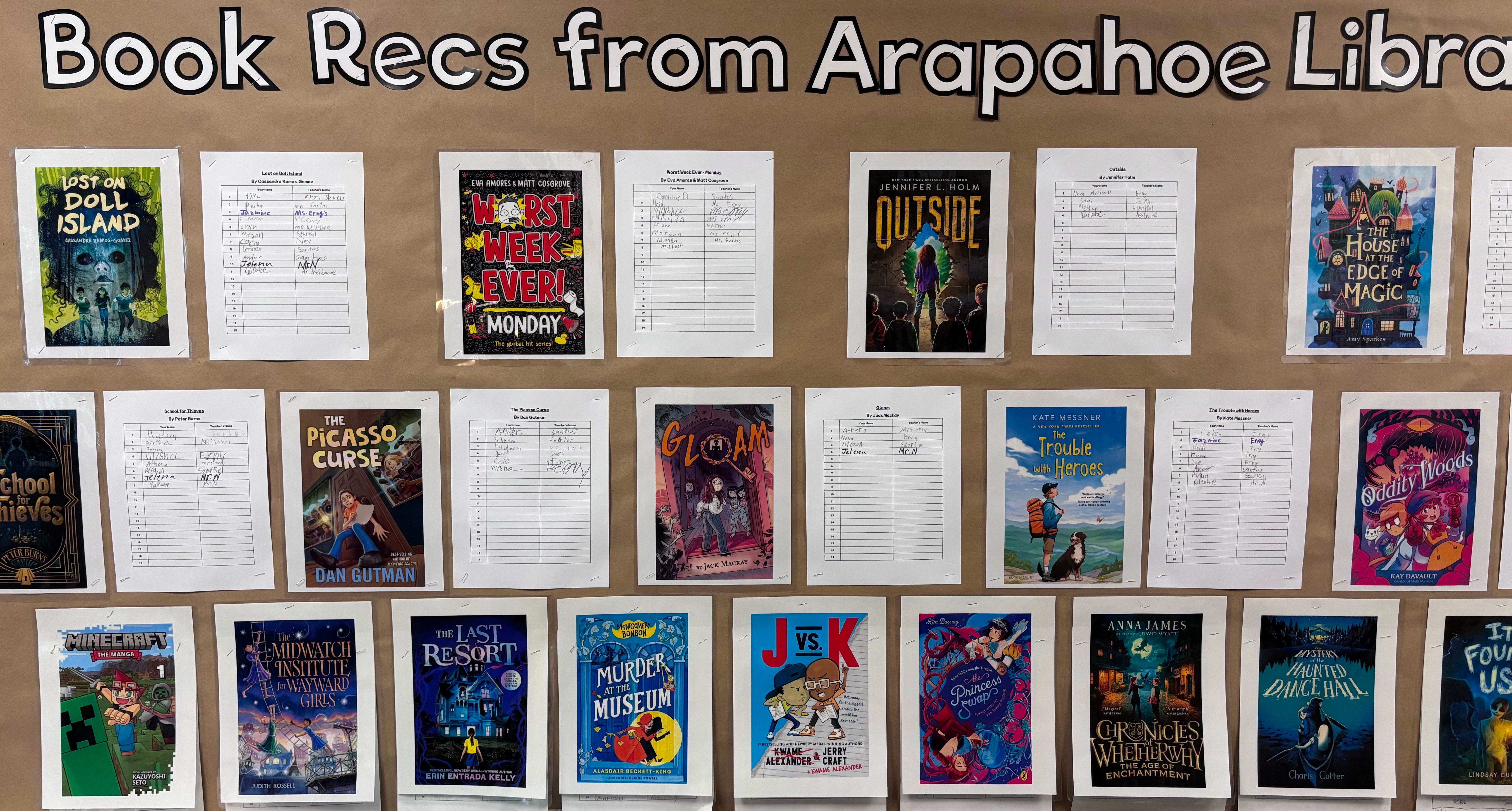
It is still not enough. I want to tap into my bibliomania and rebuild my classroom library to surround my students with great literature. I want to increase their immediacy to great books. When I am speaking to a student and her comment reminds me of an classic children’s book or outstanding graphic novel, I want to be able to reach out, grab it and say, take and read. I want books that professor and cultural historian, Jacques Barzun, said help them “live in a wider world.”
“But why, after all, learn to read differently by tackling the classics? The answer is simple: in order to live in a wider world. Wider than what? Wider than the one that comes through the routine of our material lives and through the paper and the factual magazines—Psychology Today, House and Garden, Sports Illustrated; wider also than friends’ and neighbors’ plans and gossip; wider especially than one’s business or profession. For nothing is more narrowing than one’s own shop, and it grows ever more so as one bends the mind and energies to succeed.”6
It may be unrealistic to envision an elementary classroom library with tens of thousands of books7, but I do believe it is possible (essential) to intentionally create a library that grows students. Online, there are resources for finding great literature for children, including March Book Madness, a bracket-style tournament where books compete one-on-one. Their selections of picture books, middle grade books, and young adult books are exceptional (award-winning books and graphic novels that are diverse, well-written, and representative of students’ lived experiences). There are also many educators who are dedicated to providing students with quality literature.8 But, first, I need to build a strong base from which my library can continue to grow.
But that time is not lost which is employed in providing tools for future operation: more especially as in this case the books put into the hands of the youth for this purpose may be such as will at the same time impress their minds with useful facts and good principles. If this period be suffered to pass in idleness, the mind becomes lethargic and impotent, as would the body it inhabits if unexercised during the same time.
Thomas Jefferson, Notes on the State of Virginia, Query XIV
A Classic Literature Foundation
Inspired by Ruth Gaskovski’s Reading Rebellion Masterlist, I plan to fill my bookshelves with classic literature that stretches students’ vocabulary, patience, and imagination. Her masterlist recommendations are based on her beloved family’s volumes and curated from lists such as the Mensa for Kids Reading Program, Susan Wise Bauer’s The Well-Trained Mind, Michael D. O’Brien’s Landscape of Dragons, Memoria Press, and The Classical Learning Resource Center Reading Lists. As a teacher, I have no shame in asking parents and the community to help fund my classroom. For the past five years, I have created book registries with the March Book Madness selections so that anyone can purchase books for our classroom. Generous parents have gifted me some excellent books. After spending time reading through Gaskovski’s Reading Rebellion and Catherine Oliver’s Reading Lists, I am galvanized into using a strong foundation in classic literature to rebuild my classroom library. With that base, I will continue to add diverse literature by underrepresented and marginalized writers. I want students to have access to what literary expert, Rudine Sims Bishop, calls mirrors and windows.
“When there are enough books available that can act as both mirrors and windows for all our children, they will see that we can celebrate both our difference and our similarities, because together they are what makes us all human.”
Great literature (whether written for children or adults) strives to give meaning to the human experience. In Of What Use the Classics Today?, Barzun believes that classic literature give access to humanity’s possibilities while enlarging and nourishing one’s spirit. Having a classic children’s literature foundation is important because I want students to develop good taste in literature. But they can only develop that by reading widely and deeply. In response to a recent New York Times interview with Ezra Klein about the taste and the internet, Henry Oliver believes that “the more you sample, the better and broader your taste will be. The more you stick to what already speaks to you, the more limited and narrow your taste.” If I want my students to have a chance at appreciating great children’s literature, I must supply it myself. I want students to “pay attention [to], acquire knowledge [from], and to see [their] personal reactions and deep feelings” to great books. Students will not get a broad range of literary experiences only reading formulaic books and internet-themed novels. Developing taste requires reading literature. In Naomi Kanakia’s book, What’s So Great About the Great Books?, she describes that “when you open the Great Books, you enter into a conversation with the past. You experience a much broader diversity of opinions than is possible if you stick primarily to contemporary literature. And from that diversity, you start to see possibilities that you hadn’t previously perceived.” I am horrified at what possibilities my students see when they read video game manuals, AI-generated stories, and TikTok picture-book biographies. What diverse opinions are found in The Ultimate Guide To Tiktok or The Official Skibidi Toilet Survival Guide? These brain-rot books do not offer a diversity of opinions. And while there is no official Great Children’s Books canon, I am confident that much of Scholastic’s book fair offerings will not last long enough to be deemed a classic. This is why I am interested in filling my classroom library with books that have lasted throughout history. Kanakia gives us an easy (if unsatisfying) answer as to what constitutes a “classic.”
“…but over enough time, if the book is tested by enough people, in enough cultures, and found to be valuable, then it’s likely that there is something within the book that is, if not universal, then at least broadly appealing. True greatness is the union of a book that has that fertile, timeless quality with a reader capable of perceiving that quality.”
While I am frustrated with the amount of brain-rot marketed to my students, I am wary to create my own Great Books list for children.9 Instead, I would rather build a classic literature foundation, and then champion all of the great new literature that is available to students. I actually agree with author, Kate Messner, when she says,
“We can remind kids and their grownups that it’s okay to love funny stories or romance or comics or horror or nonfiction or series or whatever makes you love reading, no matter what some 40-something-year-old man thinks about your favorite books.”10
I want my students reading whatever they want and I want them to have access to better quality books. Diversity is important. My classroom library will always have stories written by marginalized voices. And I agree with Kanakia when she says that we are “exposed to the greatest diversity when we read work from the past, precisely because the past has such different assumptions from those of the present.” Having a foundation in literature does “bridge the gap between time, places, and cultures.”
I have no desire to tell my students that they must read certain books, or not read other types of books. That is not the structure of my classroom. Yes, I am choosing what books end up on the shelves, but they “belong” to my students in the sense that they are free to read or not read any volume. I will always recommend particular books over others, but in the end, my students have the agency to choose what they read. My job, then, becomes to offer them as much quality and variety and diversity as possible. If I cannot supply all of the greatest books, at least I can create a classroom library that might be a gateway drug to larger, public libraries, and more and more great books. How can I deprive students of the feeling Naomi Kanakia describes.
“To open the Great Books is to begin a conversation. And the nature of that conversation is different for every person. Everyone who’s had a sustained encounter with these books has felt something, has felt themselves changed by them.”
This is all I want anyway: for my students have meaningful conversations with great literature; to be hooked on reading, forever seeking good books to tolle lege.
Have a great week!
— Adrian
Many a man lives a burden to the Earth; but a good Booke is the pretious life-blood of a master spirit, imbalm’d and treasur’d up on purpose to a life beyond life.
John Milton, Areopagitica
My Bookshop Wishlists & Registries
When I have a little money, I buy books; and if I have any left, I buy food and clothes.
— Desiderius Erasmus
If you would like to donate any books to help me build my Tolle Lege Library, you can view my book registry here.
If you would like to donate books from the March Book Madness selections or the Newbery Awards, you can view those registries here:
All books purchased from these lists go directly into my classroom library for students to read. Thank you!
Resources
Why “Book-Shaming” Won’t Solve the Children’s Literacy Crisis by Jessica Winter | The New Yorker
I realize that my criticisms of current book offerings to students might be considered a diatribe similar to children’s book writer, Mac Barnett’s recent comment on the state of children’s book publishing. My intention is not to shame11 certain books (perhaps enshitified is a bit harsh), but to express frustration that big publishers are profiting from poor quality books. This New Yorker article discusses the recent Barnett controversy and the importance of entry-level graphic novels, like Diary of a Wimpy Kid.
How bringing comics into the classroom made me love teaching again by Tim Smyth | PBS News
This is a great blog post by highs school history teacher, Tim Smyth! His passion for comics and reading is clear from his writing. I love how he turned to comic books to help him deal with burnout.
Hooked on Classics | Harvard Graduate School of Education
It is important that my students have a wide variety of great literature. I want my classroom library to be culturally and racially diverse, which is I am supplementing with books from underrepresented and marginalized authors. This article discusses the importance of diversifying texts in classrooms.
If you are not familiar with Jeff Smith’s epic, Bone, check out this video history. It will give you a better appreciation for comic books and graphic novels as literature.
This video is fascinating! What is most interesting is that my anecdotal experiences align with these statistics. It is also another great piece about how groundbreaking Jeff Smith’s Bone was to the comic book industry.
What student wouldn’t want to be in Colby Sharp’s classroom? I drool every time I watch this video. Mr. Sharp is a tireless advocate for children’s literature. He also co-wrote the book, The Commonsense Guide to Your Classroom Library with Donalyn Miller. If you need a good book recommendation for your students, check out his YouTube Channel.
This is a short clip from a longer interview with Rudine Sims Bishop. Known as the “mother of" multicultural children's literature”, she advocates for books in which children can see reflections of themselves, but also look through and see other worlds.
This video is part of the We Need Diverse Books campaign to diversify classroom libraries. Too few marginalized children see reflections of themselves in the books they read. Books are more than mirrors-- they’re windows as well. The more kids read, the more they understand not just themselves. Matt de la Pena, Jacqueline Woodson, Grace Lin, Cindy Pon, Lamar Giles, Arthur Levine and John Green all discuss why we need diverse books in classrooms.

Naomi Kanakia’s Woman of Letters is an incredible Substack! Her approach to reading (and sharing her wisdom with others) is as a guide for the lay reader. She is a deeply reflective autodidact who loves Great Books and loves discussing them. Kanakia writes short stories and literary essays, posting about the Great Books and/or the literary world every Tuesday. I highly recommend subscribing (and buying her latest book, What’s So Great About the Great Books? Why You Should Read Classic Literature (Even Though It Might Destroy You).

As always, Joel J Miller write with sagacity, this time about children’s books deemed “problematic.” As a parent who adamantly read to his three children (and recommended “inappropriate” books as they got older), I agree with his critique. “Reading is about relating.” Sharing and discussing books with your own children is one of the most meaningful (and important) things I did as a parent. No regrets!
This and Michele Gorman's Getting Graphic: Using Graphic Novels to Promote Literacy were my pedagogical bibles.
I used to tell people that I taught myself to read using old Superman comics.
High school U.S. and Modern History teacher, Tim Smyth, is someone I emulated during this teaching epoch. He recently published Teaching with Comics and Graphic Novels: Fun and Engaging Strategies to Improve Close Reading and Critical Thinking in Every Classroom. He offers workshops for teachers looking to incorporate comic literature in their teaching.
Bone remains a masterpiece in comic literature. It pioneered the graphic novel boom. Jeff Smith’s masterfully long-form pacing (think Looney Tunes meets The Lord of the Rings) makes for a tight, cohesive narrative that evolves slowly.
From Jacques Barzun’s, Of What Use the Classics Today?
At 69 years old, Thomas Jefferson wrote, My bibliomany has possessed me of perhaps 20,000 volumes. Umberto Eco kept 30,000 volumes in his apartment in Milan, and 20,000 housed in his country home near Rimini.
Fifth-grade teacher, Colby Sharp, offers recommendations on his website and book reviews on his YouTube channel. Veteran teacher, Julie, Books for Kids offers incredible book recommendations for the pickiest of readers. Former middle school English teacher, Clarkie Doster, helps kids connect with the books that turn them into lifelong readers. Afoma Umesi runs the website Reading Middle Grade, which is dedicated to championing the best books for tweens ages 8-14. She help parents and educators find books for tweens. Donalyn Miller has been advocating for children reading since her book, The Book Whisperer: Awakening the Inner Reader in Every Child came out in 2009.
The closest things teachers have to the Great Books list Naomi Kanakia uses (from The New Lifetime Reading Plan) is the Caldecott Award picture books and the Newbery Award books. The New York Public library also has curated a list: 125 Kids Books We Love.
@katemessner (2026, May 6) “About the 94.7 percent comment and why it matters…” Retreived from https://www.threads.com/@katemessner/post/DX_8WNHDd8-?xmt=AQG0airPYGQYXIkKtkyy5-gwGnyWSEugqunyBkNiOJHm2A.
I acknowledge elementary-school librarian, Arlene Laverde’s sentiment, “We need people to want to read, as opposed to policing what they read. The book-shaming has to stop.” I wonder if what Scholastic and Graphix is offering is really converting reluctant readers to avid readers. In my experience, students will pick up a book about Minecraft or a TikTok star, flip through the pictures, read a few captions, and then ask to “read online”, which usually means playing games or watching videos.