
Week One
Resources from my first week of school.


I am very familiar with starting a new school year. Last week was the first week of my 24th year as a public school teacher. I know what to expect: new students; new parents; new school supplies. No matter how many times I’ve started a new year with students, I never tire of the feeling of having a fresh start. The new students who are assigned to me each year come with their own stories and collection of schooling experiences. Many times, these are mostly positive or neutral classroom experiences. Sometimes however, students have had very challenging (or even traumatic) classroom or school experiences. My classroom then becomes a safe haven for students who need it the most. That is what I provide at the start of a new school year.
The first week of school is for building community. I delay teaching academic content for at least the first four days of school while we are getting to know each other, building trust, and students are learning the routines of my classroom. This does not mean there is no reading, writing, or mathematics during this first week. I don’t use meaningless filler activities or uncomfortable icebreakers. Instead, I take time to get to know each of my students, facilitate opportunities for students to get to know each other, and teach them how to listen and learn from each other. In many ways, the first week of school is the most important of the entire school year. This week sets the tone for everything that is to follow: expectations, rituals and routines, conflict resolution, movement in the classroom, teaching and learning, and classroom discussions.
I am always amazed how much I have to deprogram my students from their previous inhumane classroom experiences. I have to teach my students that in our classroom, it is not only okay, but expected, that they advocate for their needs. If they have to use the restroom, all they need do is tell me where they are going and return quickly. If students need to stand up and move to a quieter table to work, they do not need to ask my permission. There are no penalties for making mistakes in our classroom. In fact, I celebrate mistakes. Without mistakes, there is no learning. Failing is expected.
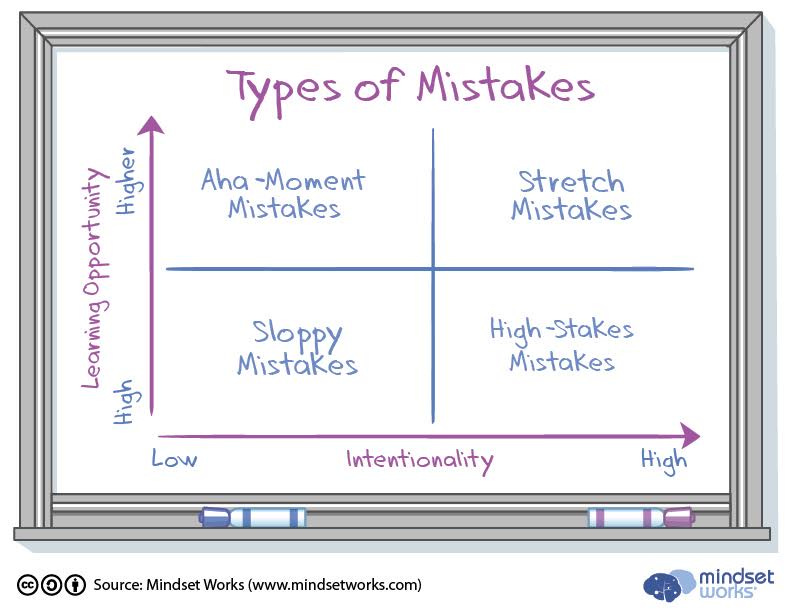
This year, I used a few of my favorite activities and tried some new things with my students. Here is a rundown of all of the resources I used Week One in my classroom.
Monday
In our school district, we have a day where only the older students (Grades 3-5) attend. I call this Day 0 because it is a full day before the first official day of school. I use the day to unpack and organize our school supplies, introduce ourselves, take a tour of the classroom, learn some of my expectations, and create our classroom agreements.
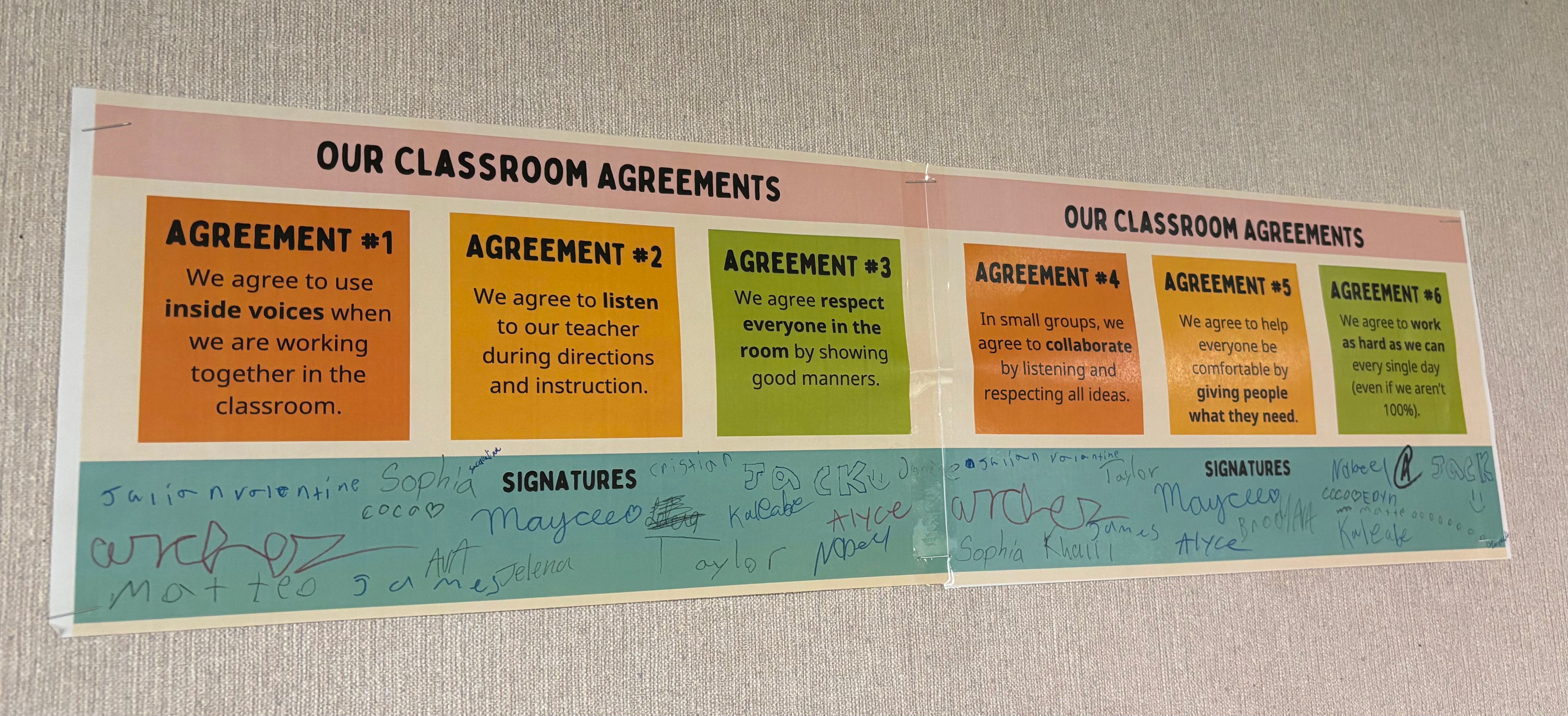
This year, I used Marcus Luther’s Values Activity with my students. Marcus does an excellent job explaining his activity. I highly recommend you listen to his approach.

Now that I am back teaching in the main building, I inherited a huge bulletin board outside of my classroom. If you have ever seen the inside of my classroom, you know I am more of a poster teacher than a bulletin board teacher. Luckily, I found this incredible activity by Tom Rademacher that simultaneously builds community and gives me something I can use to decorate our up-front communal space. Stay tuned!
When building our classroom community, I use the guiding principles from Michael Sorrell, President of Paul Quinn College: LEAVE, LEAD, LIVE, LOVE. I introduce our classroom ethos of We over Me: The needs of the classroom community supersede the wants of the individual. We work together to be successful fifth-grade students.
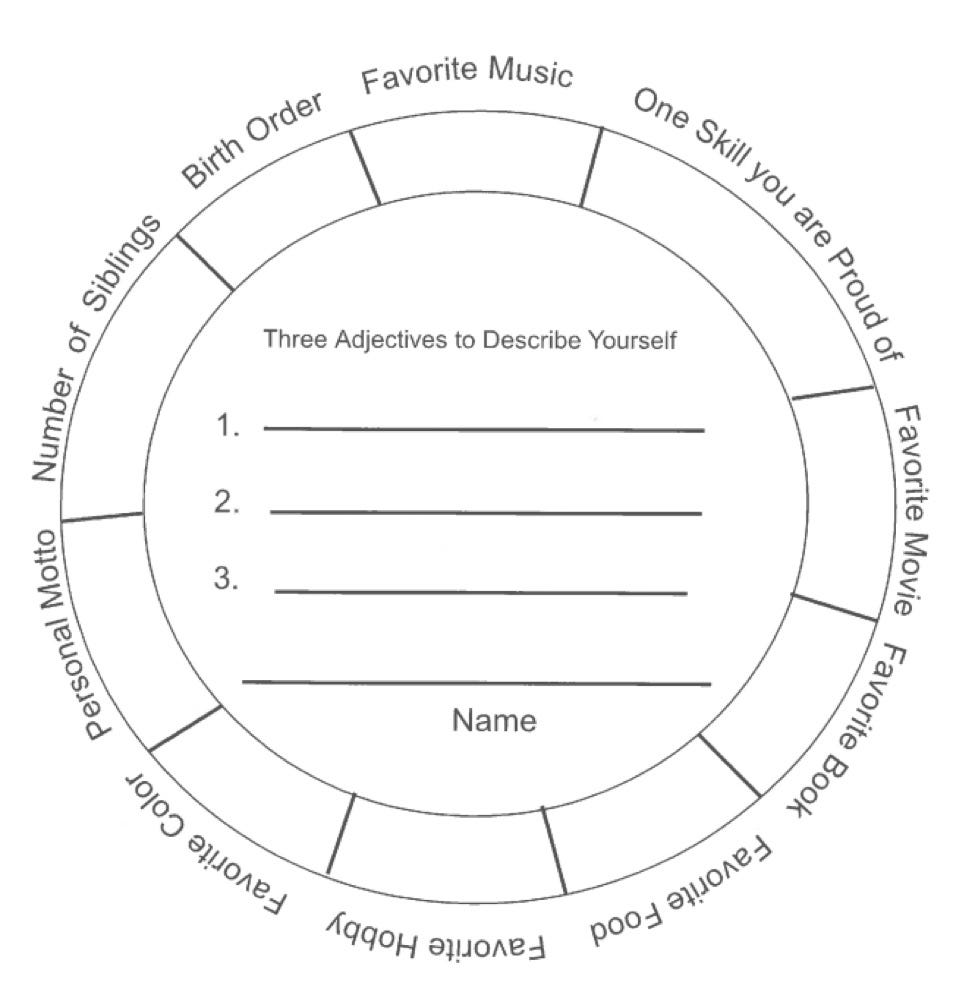
Each year, I use some form of a Personal Identity Wheel, helping me get to know my students and helping them get to know each other. When students explore their multifaceted identities, they realize that they so much more than just student. They begin to see similarities and differences among their peers. Depending on the grade level you teach, you can use this primary version or a social identity wheel. Starting the first day of school with talk of identities communicates to my students that I affirm and respect who they are and the assets they bring to our classroom community.
Tuesday
Tuesday is the first day of school for the first and second-graders. So, while they were getting to know their teachers, I spent the day getting to know my parents. I scheduled quick 10-minute connection meetings with as many of my families as I could. During our informal conversation, I asked two questions: (1) How can I best help your student? and (2) What is something you wish your teacher knew about your student? I take notes, but mainly, this is an opportunity for connecting with my new families. I also sent parents a Google Form to share some basic information, their student’s strengths and challenges and goals for the upcoming school year.
In between meetings, I spent the day getting reorganized and adjusting my plan for the rest of the week. I’m always grateful for this day because it helps me make necessary tweaks in preparation for the rest of the week and the new school year.
Wednesday
The first day of school for all students! When students arrived, they found on their tables a one-page explanation of the origins of the name of our classroom. We read W.B. Yeats’ poem, Who Goes With Fergus? and spent the morning discussing its meaning, metaphors, and how it is connected to our classroom, The Shadows of Fergus.
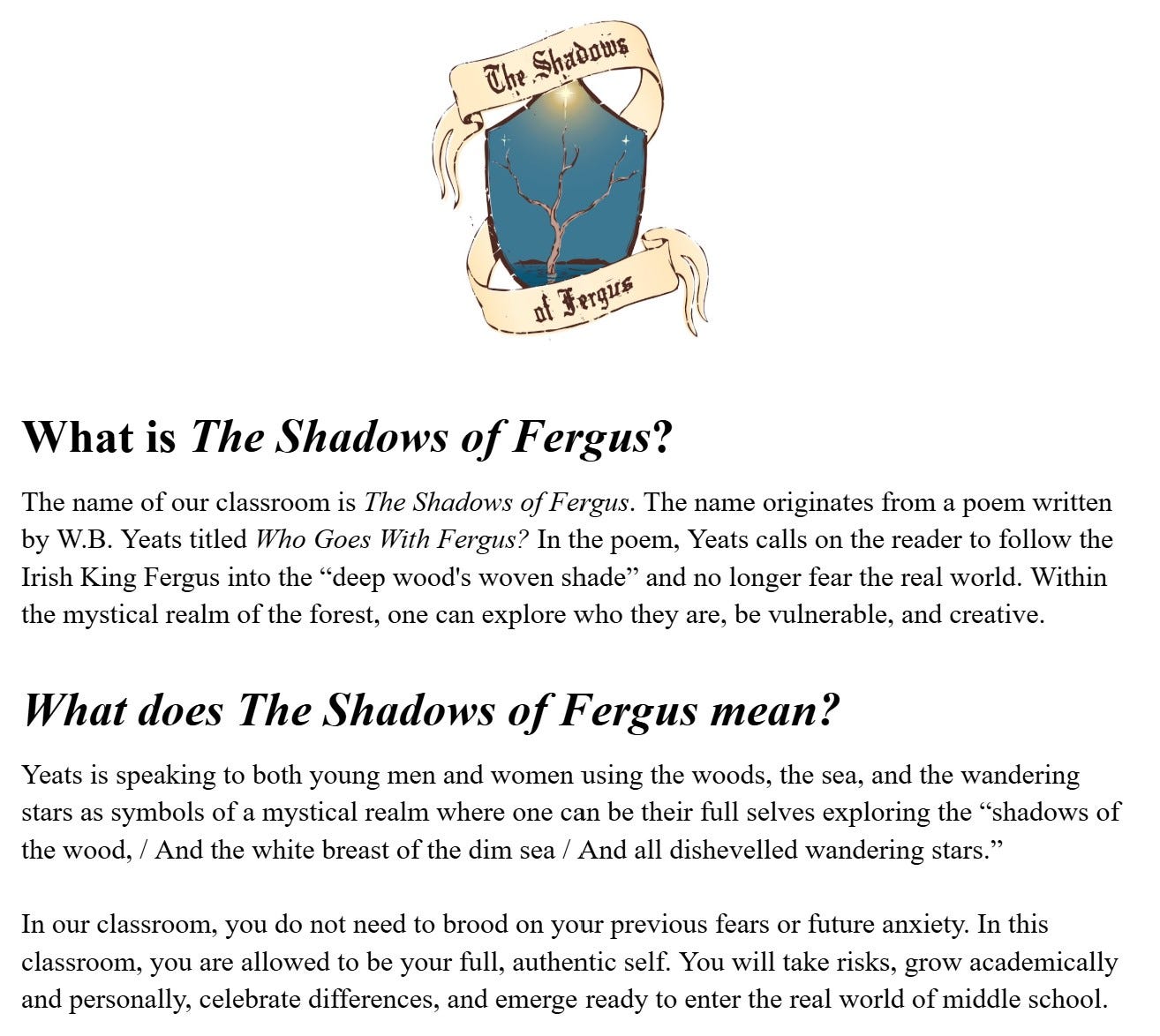
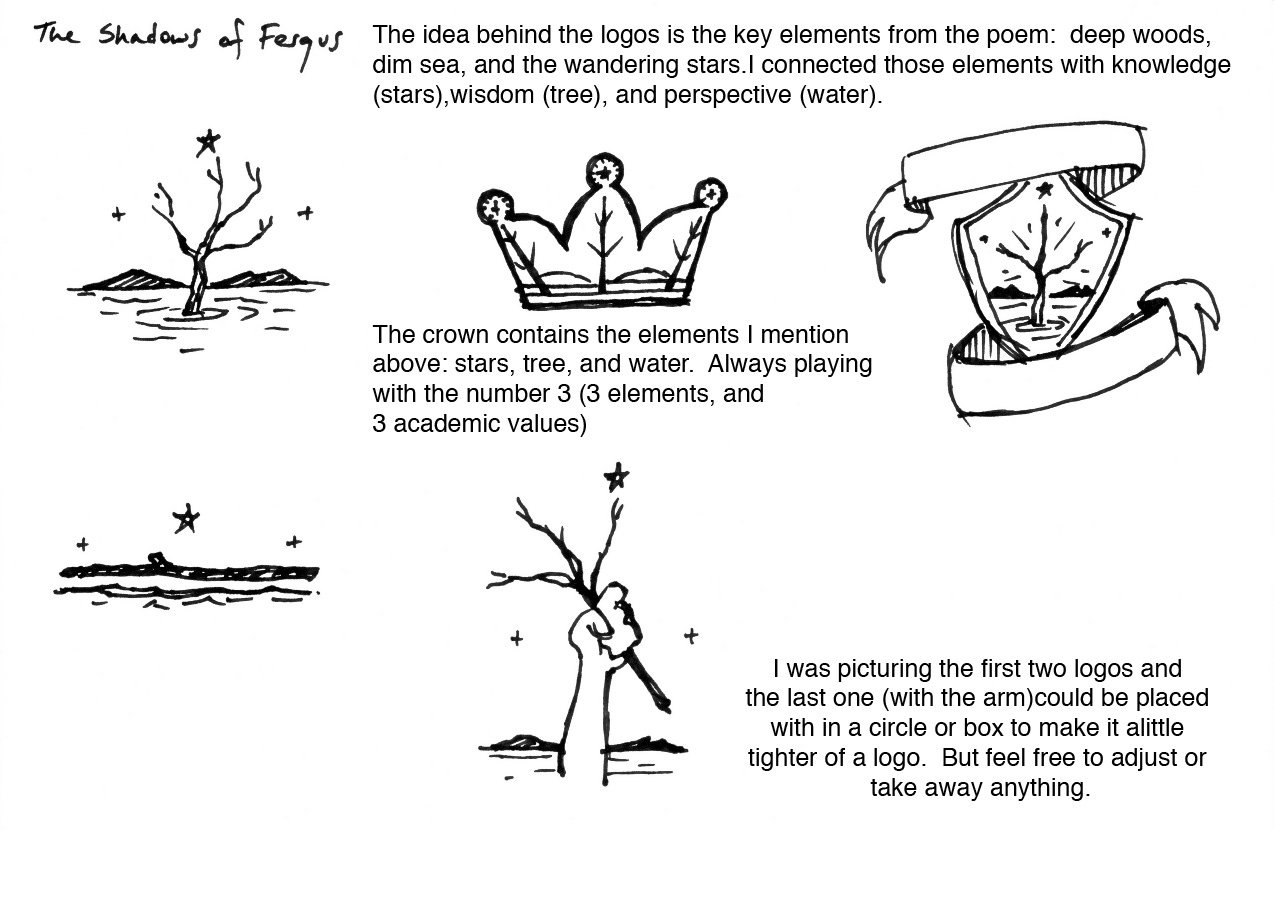
This is something brand new for me this school year. Who Goes With Fergus? has sentimental meaning for me, and I was unsure how naming my classroom would work in tandem with building our classroom community. Since this poem is a part of my pedagogical origin story, sharing this with my students felt vulnerable and the right thing to do. Using Yeats’ “deep woods”, “dim sea”, and “wandering stars” as metaphors for knowledge, wisdom, and perspective, fit with our classroom ethos.
We spent the rest of the day labeling our school supplies, setting up student laptops, discussing my expectation with technology, and listening to music while we continued to bond with each other. I intentionally keep this day less busy because I use the downtime to help my students adjust to being in a more humane classroom environment where kindness, love, and independent accountability are more important than strict control. Unfortunately, my students need to relearn (and have lots of practice with) how to be a thoughtful and contributing member of a learning community with their peers. Since my primary goal is to teach students through kindness, love, and empathy, I ended the day sharing that in our classroom, I will emphasizes storytelling over lecturing; relationships over assignments; wondering over worksheets; collaboration over competition; flow over finality; flexibility over rigidity; non-conformity over compliance; continuous feedback over grades; deep learning over rote memorization, and civil disobedience over authoritarianism. I will always challenge them to work hard, be creative, and strive to be their best selves.
Thursday
By this point, students are beginning to feel comfortable. I heard from many parents that students came home the day prior excited about being in the fifth grade. This is a good sign that our community building is working! Students are more excited to be in class with someone they know, and have things in common with, then with people they don’t know or are unsure about. Students now know each other’s core values, likes and dislikes, and a few family or school stories from the past. Now it is time for them learn about their creative selves and find their ideal creative collaborator!

Adobe has a personality-type quiz called Creative Types Shape the Future. Years ago, I used to have students take a quiz to learn what type of intelligence they favor based on Howard Gardner’s Theory of Multiple Intelligences. Since then, I have learned a lot more about how children learn and am very skeptical of intelligence tests and psychometrics. Today, I prefer a science of my students’ individuality and the context of creative learning rather than a theory of general intelligence.
Adobe’s My Creative Type is a 15-question quiz that gives some insight into one’s natural way of thinking, problem-solving, and collaborating. The goal is to reveal where one’s creative strengths lie and how they might serve as a force for innovation. 20 years ago, I put great faith in Gardner’s Multiple Intelligences, trying to cater each of my student’s “Smart” (e.g.: Word Smart, Body Smart, Music Smart, etc.). Now, I use this fun Adobe quiz to help my students see their many creative strengths and how they can work together to grow this school year. There is so much overlap in the Creative Types, that students quickly see that they are all different types of creative.

Since students are so used to labeling their strengths and weaknesses using only academic subjects (I’m not a Math person), it is fun for them to see that they can have strengths in ways outside of a school setting. All students have genius, aspirations, and opportunities for growth. This activity makes for a great Week One discussion!
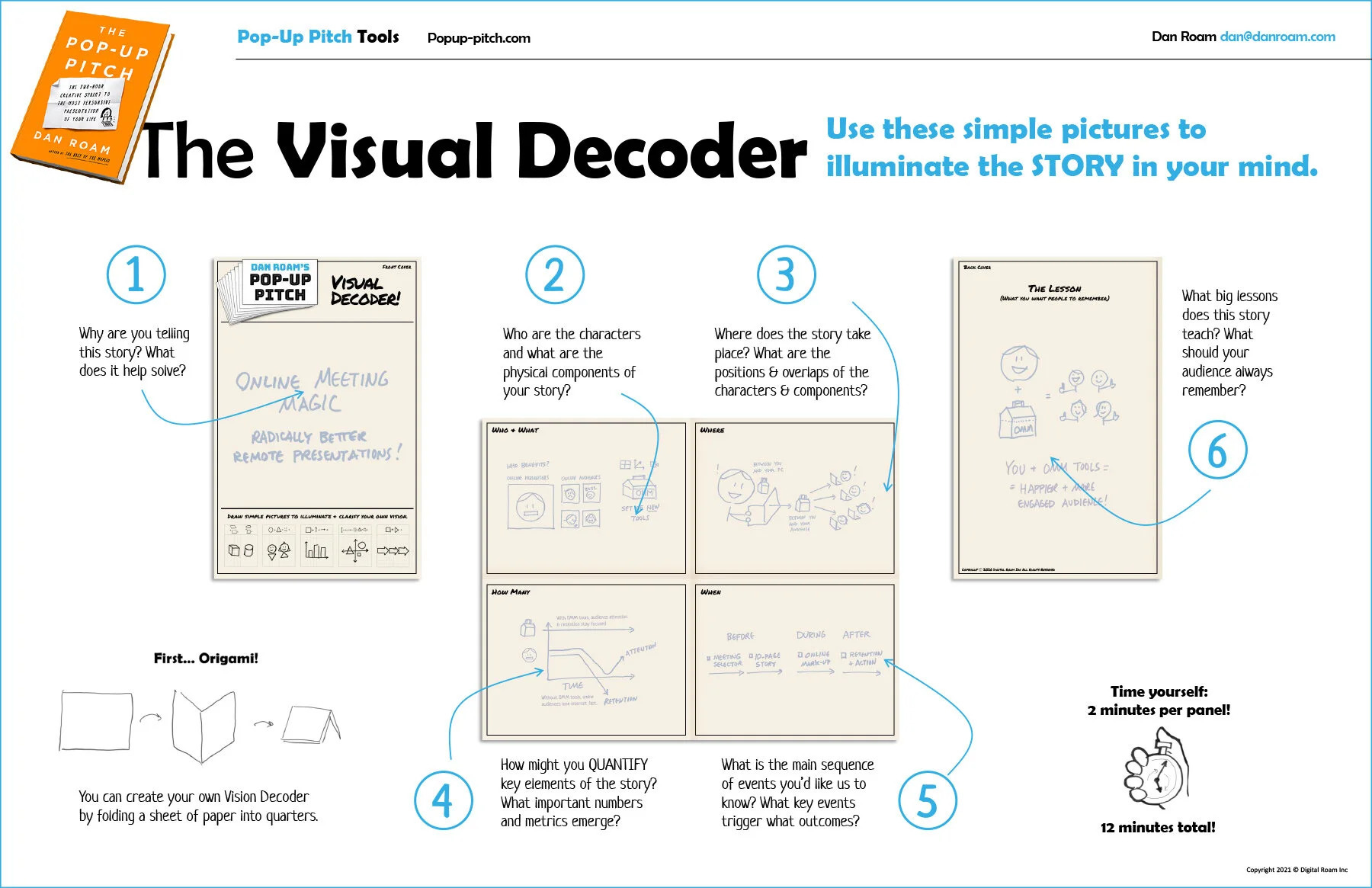
Since I do a lot of doodling as part of my teaching, I love showing students Dan Roam's visual vocabulary. For years, I have told my students to “show your work.” Visual thinking helps me tell better stories and helps students stay engaged and clarify complex concepts. When I teach students how to use basic shapes to break down complex concepts visually, they better understand what they’re learning and have an easier time articulating their thinking. A tool for this is The Visual Decoder.
In Roam’s latest book, The Pop-Up Pitch: The Two-Hour Creative Sprint to the Most Persuasive Presentation of Your Life, he uses a Visual Decoder to create a persuasive presentation, or pitch. I use his Visual Decoder as a tool for students to use when synthesizing their thinking. For example, students might use the Visual Decoder when summarizing a book for a book report or a science concept for their notebooks.
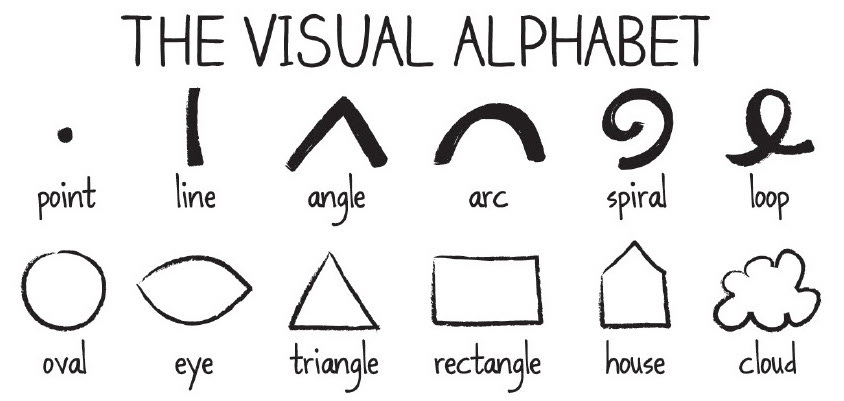
On Thursday, I taught students how to use a visual alphabet to draw and explain their thinking. We took big black markers and blank paper and practiced the basic visual letters: point, line, arrow, triangle, square, circle, and blob. Quickly, students saw that they could combine these shapes to create pictures that help tell a great story.
I ended the day introducing students to their first writing experience, The Playlist of My Life. This narrative writing project is based on Greg Michie’s playlist project. I have tweaked it over the years, allowing students to use any media to create a playlist of 5-10 works they love. For each one, students are to write a short paragraph explaining why a particular piece is meaningful. Some questions I have them consider.
What makes you happy or calms you?
What can you connect with on a personal level?
What helps you release anger or sadness or stress?
What reminds you of a specific or significant time in your life?
The essential question I presented to students is How can we learn about each other through media entertainment? I shared my own playlist and gave students time to brainstorm a list of meaningful media that will help us get to know each other beyond the usual icebreaker activity. For example, whenever I listen to ABBA’s Dancing Queen, I think about my Mom’s bright red Ford Escort with the license plate DDYSGRL. She always kept her ABBA CD in the car’s player so, when I would start the car, Dancing Queen would blast full volume, earning me the nickname “Daddy’s Girl.”
Students will be writing their mini-narratives next week before creating their own Playlist of My Life slidedeck to share with the class.
Friday
I used this last day of the week to introduce my students to one of the most important rituals we will do throughout the school year, Family Meetings. Every morning, when students arrive, they will set an intention for the day. Eventually, I will have students journal each morning, but for our first Friday, I simply had them write their intention on an index card to bring it to our first Family Meeting. Our Family Meeting is my way of creating a daily practice of Community Building Circles. I strongly believe that my classroom of students is a family. We spend over 180 days together, and in order to build a strong community, we need a place where we can gather and have what Matthew Kay describes in his book, Not Light, But FIRE: How to Lead Meaningful Race Conversations in the Classroom, as House Talk. Kay explains.
The phrase "house talk" comes from when I was growing up, you know, there were some things where if I overheard my parents speaking, they would say, ‘Hey, boy, this is house talk.’ And that meant, you know, don't talk about it outside this house.
I think house talk is necessary if you are trying to have race conversations and other sensitive conversations in class because the outside world is teaching them the exact opposite: to own each other, to embarrass each other, to put stuff out there. In a house talk environment, it's kind of like we don't want to do that to each other. We want to take care of each other. We're all trying to learn here.
Our Family Meetings will be a place where students can share good news, their personal stories, ask their peers for advice, and practice being vulnerable. I want my students to feel seen, heard, and valued. The first 30 minutes of every day, I will gather students to the back of the classroom, sit in a circle, and begin the practice of cultivating a collective sense of belonging. In today’s Family Meeting, students shared their intention, and we practiced what Kay outlines as his discussion guidelines: listening patiently, listening actively, and policing our voices.
After our soft start to the day and Family Meeting, I introduced students to a very different type of Mathematics classroom, a Thinking Classroom. Based on Peter Liljedahl’s Building Thinking Classrooms in Mathematics, the goal is to get students actually thinking about mathematics instead of mimicking the teacher’s thinking. I have been using a version of Liljedahl’s Thinking Classroom for a few years now, so today was about introducing the process to my students in a fun and engaging way.
The first thinking task I use is a card trick called The Four Aces. I randomize the groups, give them a deck of cards and a dry-erase marker, and situate them around a dry-erase easel. I show them the trick and then give the rules for engagement.
Rule 1: The person with the marker CANNOT speak! They may only write.
Rule 2: The person without the marker will be answering the question or building on other questions or comments from the group.
Rule 3: The third person must ask at least one clarifying question.
Rule 4: EVERYONE in the group needs to be able to summarize the thinking.
Students were so engaged and had a ton of fun trying to solve this card trick. It will take a lot of practice before our Thinking Classroom is running smoothly. Standing in a collaborative group takes some getting used to, so I plan to spend all of next week practicing the routines and reinforcing the practices of a Thinking Classroom.
Headspace and Mindful Meditation
I have been using Andy Puddicombe’s Headspace since returning to the classroom during the pandemic. We use both focused-attention meditation (concentrating on a single object, thought, or visualization) and open-monitoring meditation (broadening our awareness of our environment). We always start small, meditating for only a few minutes at a time. Headspace has a ton of great resources for teachers, including a Meditation 101, which has links to specific videos that you can use when introducing meditation to students. The goal is to help students have better focus and less stress.
After this first week of school, students are tired. It’s hard to go from the languid pace of summer vacation to the sustained engagement of being back in school. On Friday, I introduced students to Andy, our mindfulness guide for the year. Every day after lunch and recess, I will use Headspace to facilitate a short meditation. We will focus on belly breathing, scanning our bodies, and noting thoughts or distractions as they arise.
What a week! Did I get to all the things I wanted to do? Nope! Am I upset about it? Not at all. One thing I tried last year was to have students and parents annotate my Syllabus Unicus. I sent out a link for parents to annotate, but ran out of time during the week to have students read and make comments on the syllabus. I plan to save the syllabus for this week, now that we are officially getting into our academic content.
I learned last year that my syllabus was way too long, especially for fifth-graders! I have severely reduced it to the essentials. So far, no parents have made comments, but I am committed to having a practice where my classroom is open and malleable depending on the needs of my students.
I hope this post is helpful to you when you start again with students. I tried to cram lots of resources that I have either used in the past or experimented with this year.
Let me know how your first day/week goes. I’d love to hear about it!
Have a great week!
— Adrian
More Resources
If you haven’t started yet, watch this video before the beginning of the school year. Cornelius Minor is a phenomenal speaker and this video is the perfect thing to watch to get excited for the new school year. After I watched this video, I kept asking myself, Do I want to be a 1985 Magic Johnson or a 1992 Magic Johnson?
I realize that whenever a school creates a video like this, the footage is always pristine. It’s easy to get caught up in the Instagram versions of school makeover videos. Pharos Academy is K-12 charter school located in the Bronx, NY. I have no doubt that the principal’s passion is real, but many of these ideas would be really challenging to afford in a public school district. Still, I couldn’t help get inspired walking around this school with Dr. Travis Brown and Principal Rahh.
I find it helpful to reflect on my Just Cause at the beginning of the school year. The term comes from Simon Sinek and is often conflated with Mission or Vision statements. In this video, Sinek discusses the three things that make a meaningful Just Cause, and I find them extremely useful in mentally preparing for the marathon of a new school year.
I also love how Sinek distinguishes between a WHY and a Vision statement.
Dr. Brené Brown’s BRAVING Inventory
In the past, I have used Dr. Brown’s BRAVING Inventory during the first week of school to build trust. This year, I plan to save this activity to discuss during our Family Meetings each morning. I will facilitate times for students in small groups to discuss what Boundaries, Reliability, Accountability, Vault, Integrity, Nonjudgement, and Generosity all look like and sound like in our classroom.
MindShift is a collection of videos put out by KQED educators at any level. In just a few minutes browsing their collection, I guarantee you will find something useful for you and your students.
Demystifying the “Safe Space” | Matthew Kay
Matthew Kay’s article, How to Lead Meaningful Race Conversations in the Classroom is an excerpt from his incredible book, Not Light, but Fire. In it, Kay discusses how he spends the first couple of weeks with his high school students in a conversational “training camp.”
Pathways to Restorative Communities
If you are looking to incorporate a community circle time, check out Pathways to Restorative Communities resource page. They have resources for everything from community building to trauma-informed teaching.
A Talk to Teachers - James Baldwin
I reread Baldwin's A Talk to Teachers every year. It reminds me of the gravitas of my role as an educator. Baldwin also helps me mentally prepare to struggle with being creative and subversive in a public education system that prioritizes and favors compliance and standardization.
Could you say more about how you do the card trick? Is there someone who performs the trick with each group? Or are they watching the video?
I'm a 48-year-old teacher training student, barely in my first year of college (pedagogy), and I can only say that this article has been the most comprehensive lecture I've ever received. What a formidable method you've implemented. Congratulations! All children should have a teacher like you, and I'll definitely take your teachings with me into what will one day become my practice (I'm printing this out).