
Masterful Teaching and Longform Improv Comedy

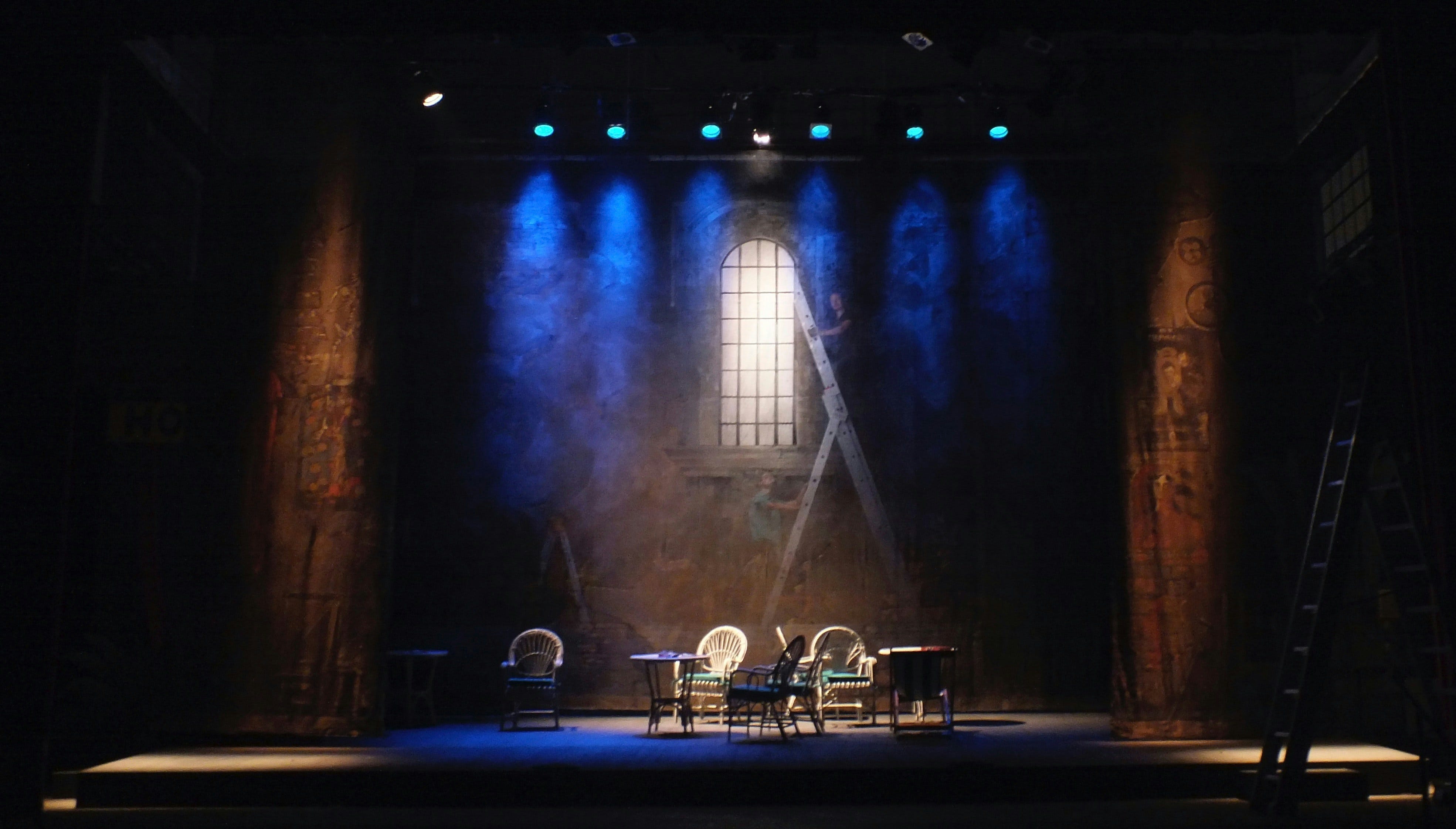
Last weekend, I saw Ben Schwartz & Friends LIVE at the Buell Theatre. If you are not familiar, Schwartz is famous for his role as Jean-Ralphio Saperstein on the sitcom Parks and Recreation. In his 2026 improv tour, he invites his friends on stage to create an improvised show. Nothing is prepared or rehearsed, and every aspect of the show is improvised in the moment. Every performance is a unique comedy experience.
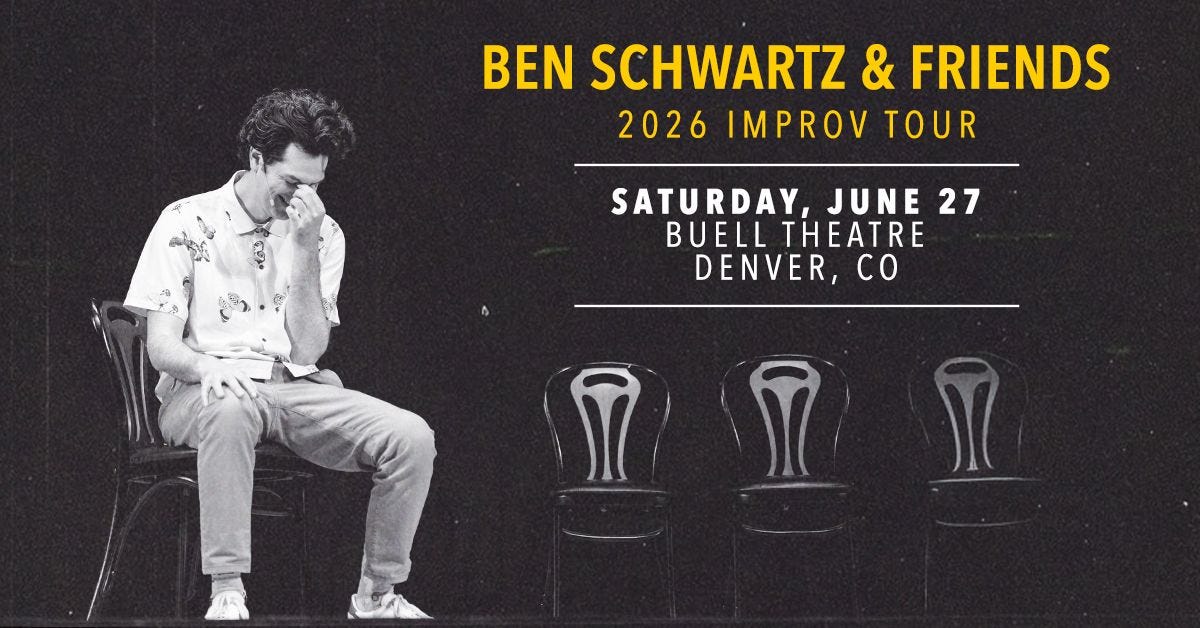
LIVE theater is incredible. It does not matter whether it is music, dance, or acting, when you sit among 2,800 people, laughing, singing, or resonating with an emotional performance, a collective effervescence builds within each member of the audience; it rises above everyone and eventually the euphoric fizz settles over the crowd.
In 1912, French sociologist Émile Durkheim coined the term collective effervescence in his book, The Elementary Forms of Religious Life. He used this phrase to describe an intense emotional experience people feel when collectively engaged in a ritual or assembly, asserting that collective effervescence is necessary for a thriving society. Durkheim believed that religious rituals are necessary to reaffirm the collective unity of a society, and that without periodic renewal, humanity’s existence is at risk of atrophying. Humans need rituals for our collective existence as a society to flourish.
This is why all parties, political, economic or confessional, are careful to have periodical reunions during which their members may revivify their common faith by manifesting it in common. To strengthen those sentiments which, if left to themselves, would soon weaken, it is sufficient to bring those who hold them together and to put them into closer and more active relations with one another.1
The ritual itself is not important. Durkheim focused mainly on religious rituals (e.g.: communal prayer, chanting, or festivals); however, as long as the sacred ritual is separate from what Durkheim calls the profane — mundane, everyday tasks like working or sleeping) — collective effervescence builds a social charge or electricity. Durkheim writes, “When they are once come together, a sort of electricity is formed by their collecting which quickly transports them to an extraordinary degree of exaltation.” Collective exaltation connects humans and amplifies shared humanity.
The World Cup is a beautiful non-religious example of collective effervescence. When 50,000 Scottish fans arrived in Boston, carrying bagpipes and wearing kilts, to watch their beloved team play against Haiti at Boston Stadium, they took over the city. The fans, known as the “Tartan Army”, drank so much beer that bar owners reported tripling their St. Patrick’s Day sales. Many pubs ran out of beer.2 At the game against Haiti, Scottish fans proudly sang their national anthem in unison. The decibel level reached 125 dB, the highest crowd noise ever recorded at a World Cup game.
Laughter, like singing, is a universal language. Laughing alongside thousands of strangers, amplifies the power of community. I strive to create a similar community in my classroom, and laughter connects me with my students. As I sat and watched Ben Schwartz and comedians Lauren Lapkus, Brandon Scott Jones, and Ryan Gaul improvise for forty-five minutes from one audience member’s story, it occured to me how much longform improv is like classroom teaching. Many are familiar with short-form improv comedy (think Whose Line Is It Anyway?). The pace is fast and mostly gag-driven because each sketch is structured like a 3-5 minute game. For example, one improviser can play the role of the host of a party. When they step out of the room, the audience gives the remaining improvisers ideas for a “quirk” for each guest. When the host returns, they interview each guest to guess their quirky identities. It is hilarious!
In longform improv, Ben Schwartz asks the audience for a story. Once chosen, the comedians must build an entire, unscripted 45-minute show based on that story. The question Schwartz asked the Buell audience was, What is a story that you tell often? One lady gave a brief synopsis of what developed into the most outrageous story.
I was homeschooled with my boyfriend and we went to a homeschool prom together.
For the first act, we watched Schwartz and his fellow improvisers create a hilarious, interwoven play with multiple scenes, recurring themes, and callbacks to earlier moments. The foundational skills of longform improv align well with the necessary skills veteran teachers use in managing and teaching a classroom full of students.
Deep Listening
During the performance, stage comedians actively pay attention to each other. They focus on the emotional state and environment set by their partners instead of rehearsing in their heads what they are going to say next. Each time a comedian makes a comment or reacts to a scenario, the other members interpret the text, subtext, and notice the physical and emotional behaviors of their partners. This is how Schwartz and the other comedians are able to create a world on stage so quickly. Listening is the most important part of improv. Comedians need to listen and look for opportunities to justify each other’s choices; they are reacting to everything on stage.
Teachers are constantly listening, learning, and reacting in responsive ways. Often referred to as “teacher moves”, these strategic actions help teachers pace their instruction, give directions, model, scaffold, and differentiate all in real time. Teacher moves require teachers to listen (literally and figuratively) to their students and the classroom environment. Veteran teachers “read the room”, consistently interpreting and reacting accordingly. When students enter either angry or sad, a masterful teacher reads their body language and adjusts accordingly. When a classroom discussion is moving off topic, a masterful teacher quickly redirects it. When a lesson is failing, a masterful teacher pivots and creates multiple opportunities for students to access and understand the academic content. Like improv, deep listening is one of the most important parts of teaching. Teachers attune to everything and every student all day.
Character Focus
In longform improv, scenes are most successful when performers quickly establish strong emotions, relationships, and clear physical actions. Performers are not seeking quick laughs, but are always looking to build the experience for the audience and the other members on stage. Veteran improv comedians will talk about not just serving the moment, but serving the entire story. What decisions do I need to make to ensure that what happens next is going to be helpful or relevant to the larger story arc? Improvisers must quickly build trust with each other and the audience simultaneously. The other comedians trust that everyone on stage is working toward the larger goal of the scene. The audience trusts that the performers work to make a cohesive and comical play.
Teaching is a long game. It requires patience and building a strong foundation. Teachers must be able to make strategic choices that align with their future goals, even if this requires a short-term sacrifice. For example, when, during the middle of a classroom discussion, a student surprised me with a mutinous comment, I quickly sacrificed the rest of our literacy block of time to address the issue. I knew that I would lose valuable time discussing our historical novel’s themes, character development, and connections to the U.S. History standards. However, the time I sacrificed strengthened our classroom community and led to important conversations.
Teaching and improv comedy work best when the focus remains on larger, shared goals. Masterful teachers know how to orchestrate learning that builds on other learning and students. Ben Schwartz did an excellent job orchestrating the comedy on stage, transforming scenes from frantic comedic sketches into rich, grounded stories. Lauren Lapkus, Brandon Scott Jones, and Ryan Gaul laser-focused on each other’s characters, set each other up to deepen their performances, and played to each other’s strengths. A masterful teacher knows their content and students so well, she can center her pedagogy on how her students relate to each other and themselves as learners. Masterful teaching requires an emotional truth that emphasizes genuine emotion and vulnerability over corny icebreakers and scripted lesson plans.
Game of the Scene
A successful longform improv show requires each member to identify and heighten funny, unusual, or interesting patterns within a scene. Since improvisers are not using a script, they build comedic momentum by recognizing the underlying comedic or dramatic premise of a scene and then elevate it. Actor, Will Hines calls it playing the game; transforming rambling conversations into tight, cohesive, and hilarious theater.
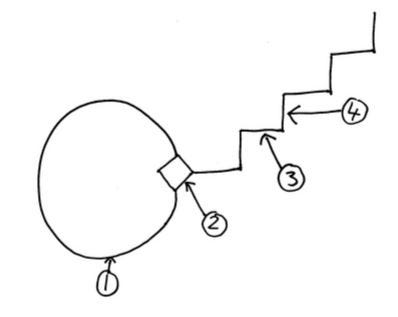
A successful learning experience requires teachers to build learning momentum. Instead of identifying and heightening unusual patterns for comedic effect, masterful teachers sense why a particular concept is difficult to understand. They do not just push the lesson forward; masterful teachers adeptly anticipate points of confusion or frustration that may stall the learning flow. Masterful teachers design learning experiences using a clear structure that allows students time to grapple with unfamiliar concepts, explore potential solutions to problems, and receive direct instruction when necessary. A masterful teacher can turn a one-time, 30-minute scripted lesson plan into an immersive learning experience that lasts for days.
Yes, And…
The most important rule of improv is Yes, And…. The improvisers must accept whatever is happening on stage and build upon it with something new. The rule is originally attributed to Ted Flicker. In 1955, it was part of the “Kitchen Rule” for his Compass Players improv troupe. Theater teacher, Viola Spolin, later developed the first structured methodology of improv through her games at Chicago's Hull-House, later used to found the legendary Second City Theater in Chicago.
In its original form, Yes, And… requires two improvisers on stage. One starts with a simple offer and then after that every line has to star with Yes, And…. For example:
A: We’re in a pub.
B: Yes And starts pouring a beer from beer pump, puts glass on bar.
A: Yes And picks up beer, hands over money
B: Yes And accepts money, puts it in till, gives back change
A: Yes And accepts change, has a sip, happens to look over B’s shoulder
B: Yes And looks behind him, points
A: Yes And points to same thing, gasps
B: Yes And gasps
A: Yes And looks terrified
B: Yes And gets dun down from behind bar, points it at intruder.
Veteran improvisers adroitly build upon each other’s ideas in real time. Yes, And… is not just a rule to follow; it is a mindset that allows for collaboration and seamless scene work. Instead of shutting down someone’s idea or trying to steer the scene in a specific direction, improvisers embrace everyone’s unique contributions. By continually adding, they create something bigger and better than any one person.
Veteran teachers know that having a Yes, And… mindset fosters a classroom learning environment of mutual trust and respect. Just like in a well-improvised scene, masterful teachers keep the learning flowing. They choreograph rigorous and engaging learning experiences that draw on students’ strengths and identities. Yes, And… tells students that everyone has value and are important assets to the collective community. Masterful teachers embrace the messiness of learning and the sometimes chaos of the classroom because they know it will lead to unexpected epiphanies and added benefits. Having a Yes, And…mindset does not mean saying yes to every student request or allowing anything to happen. Veteran teachers create healthy boundaries with students that allow them to collaborate, not compete with each other.
“It is rarely a mysterious technique that drives us to the top, but rather a profound mastery of what may well be a basic skill set.”
Watching Ben Schwartz & Friends LIVE at the Buell Theatre, I recognized how much talent and experience is required for a hilarious improv performance. Ben Schwartz, Lauren Lapkus, Brandon Scott Jones, and Ryan Gaul do not flippantly ad lib. They hone their techniques over hundreds of performances. They are not trying to be funny; they are skillfully funny people. What feels like spontaneity is a result of thousands of hours perfecting longform improv. It does not matter what stories the audience throws at them, masterful improvisers craft them into memorable comedy.
This, too, is what sets veteran teachers apart from novices. Masterful teachers have dozens of years of experience designing and choreographing engaging learning experiences. Each day presents new challenges, and no matter what students walk into the classroom with, masterful teachers create memorable classroom moments. What appears to be effortless teaching is an intentionally cultivated pedagogy.
Émile Durkheim believed that collective effervescence is necessary for a thriving society. I believe that collective effervescence is the natural result of collectively witnessing experts in their respective fields perform at masterful levels. Whether you felt it watching the Knicks beat the Spurs in Game 5 of the NBA Finals, or feel it when singing your national anthem with millions of World Cup fans, these moments bring humans together to watch humanity at its very best; cheering, singing, and laughing.
I work to create moments of collective effervescence in my classroom. When there is a tingle in the air and the atmosphere is charged with students learning, I settle into my teacher groove and move with my students. My pedagogical decisions feel intuitive. There is electricity in our community. Our shared values, goals, and beliefs all align.
I do not haphazardly arrive at collective effervescence. I design for it using the same foundational skills of longform improv. Every night, Ben Schwartz and his fellow improvisers perfect their comedic skills. There will be nights when the performers are off or the audience is unenthused. Some shows will be better than others. There is no perfect performance. Every day, I perfect my pedagogical practice. Some days, my students are off or I struggle to teach. There are thousands of things that can go wrong during a lesson; some will be better than others. Perfect lessons do not exist. Yet, we can take comfort in learning from other masters. In the end, our goals are similar: to create memorable experiences that connect us and help us grow as humans.
Have a great week!
— Adrian

Resources
If you want a taste of longform improv, check out the Netflix special, Middleditch & Schwartz starring Thomas Middleditch and Ben Schwartz. With only two improvisers, the unscripted hilariousness is even more impressive!
If you want to spend a couple of hours laughing until your sides ache, watch this video. I grew up watching Whose Line is it Anyway? in complete awe of Ryan Stiles, Colin Mochrie, Josie Lawrence, John Sessions, Greg Proops, Tony Slattery, Mike McShane, and Wayne Brady. These are true improv comedy masters!
Humans are naturally dancing creatures, and dancing with others elicits collective effervescence. Drawing on the work of both Durkheim and evolutionary biologist Bronwyn Tarr, this video explores the unifying feeling of group “electricity” that lifts us up when we are enthralled by our favourite sports teams, participating in religious rituals, or entranced by music. It is fascinating!
I loved following this story! I have friends in Boston who can attest to the good nature of every Scottish World Cup fan. I have a feeling that many of these Scots will return to Scotland with plenty of stories of fellowship and frivolity.

Will Hines is a very talented actor and comedian who has appeared on Jimmy Kimmel Live, Brooklyn 99, and many other shows. His Substack, Improv Nonsense is my new favorite read, inspiring me with so many ideas for my classroom! I think his book, How to Be The Greatest Improviser on Earth would make for an excellent teacher book study.
Kurt Wootton describes what Yes, And… looks like when doing retrieval practice with students. This article has some great ideas for use in the classroom. I have already bookmarked it and started planning some ideas for the new school year.

If you are looking to incorporate some drama exercises in your classroom, I highly recommend Sam Marsden’s Substack and books. I have used Acting Exercises for Creative Writing and it was a huge with with my students. She has a handful of other books that I hope to collect and use in the upcoming year.
The Knicks run sparked a collective effervescence in New York | NPR
If you are not a football (soccer) fan, perhaps you felt collective effervescence with the Knicks won the NBA finals. NPR's Scott Detrow speaks with New Yorker and grief specialist Barri Leiner Grant, who has written about how the New York Knicks championship run sparked a collective effervescence in the city.
Awe Experience Scale | The Expo Group
In 2019, psychologists Barry Kaufman and David Yaden, developed a scale to measure the factors within the complex emotion of awe. I am curious how I might use this scale in designing learning experiences, or even as a reflection tool for my students. If you are interested, here is Barry Kaufman’s digital version.
Durkheim E. (1915). The elementary forms of religious life (Swan J. D., Trans.). George Allen & Unwin. (Original work published 1912).
Pubs like The Dubliner served over 16,000 pints of Guinness and Tennent’s in days.
“Collective effervescence”, movement, listening - yes, and - what a rich take on the humanity of the classroom. Yes to all of these things! Also, shout out to the “tartan army”. Scotland 🏴 ❤️
My son’s high school has an improv club for students - they do shows just for fun, but also use their skills as teaching tools to get students talking about Wellness topics (vaping, healthy relationships, etc.)