
Adrian's Top Five
My Top Five favorite U.S. history books to use with my fifth-graders.

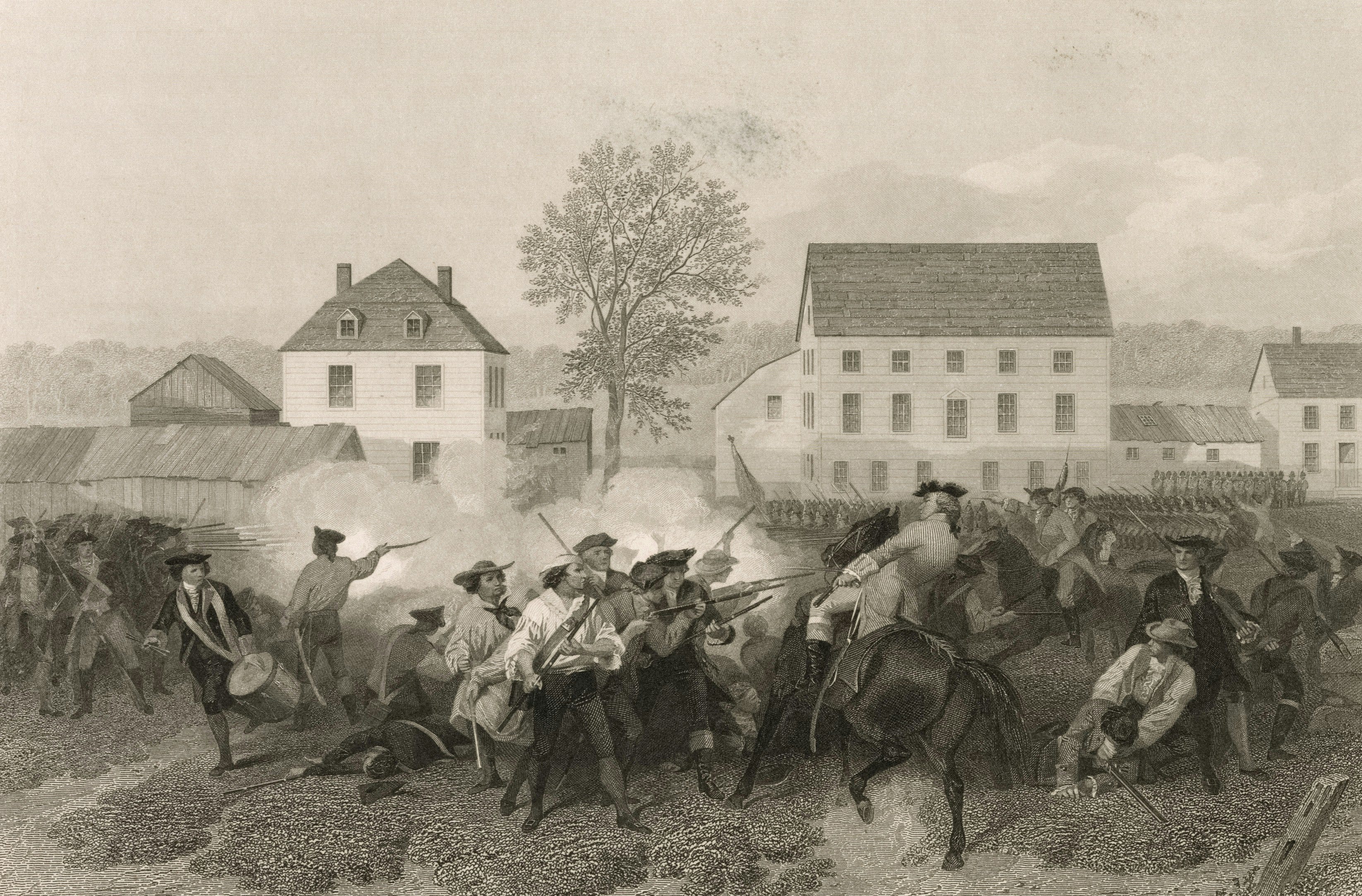
Over the holiday weekend, instead of drinking beer and blowing up fireworks, I spent our country’s semiquincentennial anniversary reorganizing my bookshelves. As part of our fifth-grade history curriculum, I teach the history of the United States from the early Indigenous Peoples of North America through the European Age of Exploration, post-Columbian colonization and the establishment of the United States Government. This includes history, geography, economics, and civics standards. It is a huge timeline with a ton of information to teach in one school year. If I relied on our prescribed textbooks, I would teach each historical event in 30-minute increments. Students learning a very shallow summation. As history teacher, Lauren S. Brown writes, “Most survey textbooks are written to satisfy an enormous number of curricular demands. In trying to please a national audience, the resulting prose is rarely built around a narrative voice, tension and selectivity that make history compelling. The stories and personality and real drama are often missing or flat.”
I despise textbooks of all kinds, including history textbooks. They are shallow, boring, and only provide a majority white, European historical perspective. There are many resources, both in print and online, that I prefer when supplementing my instruction. As I was reorganizing my classroom bookshelves, I pulled down my favorite history books. Many are written for adults, but I also have quite a few that I use in my classroom. Here are my Top Five favorite U.S. history books to use with my students.
5. Voices of a People’s History of the United States by Howard Zinn and Anthony Arnove

In 2008, actors, performers, and poets gathered at the Emerson Cutler Majestic Theatre. This was not a movie premiere. Bob Dylan, Bruce Springsteen, Kerry Washington, Matt Damon, P!nk, John Legend, Rosario Dawson, and dozens of other activists and actors gave dramatic and musical performances of historical letters, diaries, and speeches from everyday Americans. A year later, actors Matt Damon and Josh Brolin used the live footage to produce the documentary film, The People Speak. Both the live performances and subsequent film were inspired by Howard Zinn’s A People’s History of the United States and Voices of a People’s History of the United States.
When I first started teaching U.S. history, I took for granted history textbooks. I assumed that if it was in the textbook, then it was not only accurate, but a diverse representation of historical events. I have since learned that many commercial textbooks are biased omitting narratives and perspectives from marginalized people. This is why I supplement with primary source documents. Voices of a People’s History of the United States collects speeches, letters, poems, and songs by people who are often removed from history books. This is an outstanding collection of historical texts.
Whenever I need a primary source, I turn to Voices. From The Diario of Christopher Columbus to Joseph Plumb Martin’s diary entries to Sojourner Truth’s Ain’t I a Woman? this collection has a wide variety. I only regret not being able to use more of it with my fifth-grade students. The 10th Anniversary 3rd Edition (2014) comes with speeches and essays against testing in schools, and the most recent edition (2023), Voices of a People’s History of the United States in the 21st Century: Documents of Hope and Resistance collects more than 100 texts from social movements such as Black Lives Matter and #MeToo. These voices are indispensable to any history classroom.
Democracy doesn’t come from the top; it comes from the bottom.
Howard Zinn
4. An Indigenous Peoples’ History of the United States for Young People by Roxanne Dunbar-Ortiz. Adapted by Jean Mendoza and Debbie Reese

An Indigenous Peoples’ History of the United States by historian Roxanne Dunbar-Ortiz won the American Book Award in 2015. A fabulous book, spanning more than four hundred years, it reframes U.S. history using Indigenous perspectives. In 2020, curriculum experts Debbie Reese and Jean Mendoza adapted the original academic text for middle-grade and young adult readers. They include discussion topics, archival images, original maps, and recommendations for further reading to encourage students and teachers to think critically about their own place in history. An Indigenous Peoples’ History of the United States for Young People puts Indigenous lives at the center of the United States’ founding. This book is also part of the collection, ReVisioning History for Young People Series from Penguin Random House.
US history, as well as inherited Indigenous trauma, cannot be understood without dealing with the genocide that the United States committed against Indigenous peoples.
Roxanne Dunbar-Ortiz, An Indigenous Peoples’ History of the United States
3. Before Columbus: The Americas of 1491 by Charles C. Mann

I find companion books for young readers helpful when supplementing social studies’ curricula. Charles C. Mann’s book, 1491: New Revelations of the Americas Before Columbus uses science, history, and archaeology to examine what life was like in North America before the arrival of Christopher Columbus. Mann refutes many myths about Indigenous people and the land. In Before Columbus: The Americas of 1491, Mann alters our understanding of the Americas before the arrival of Columbus in 1492 through beautiful illustrations and photographs. While I do make copies of certain chapters for students, I find that if I leave it open in our classroom library, students are drawn to the sidebars and oversized chapter headings.
It is always easy for those living in the present to feel superior to those who lived in the past.
Charles C. Mann
2. A Young People’s History of the American Revolution: How Common People Shaped the Fight for Independence by Howard Zinn. Adapted by Rebecca Stefoff

I realize that I am including another Howard Zinn book. Historians criticize Zinn for being too left-leaning, saying that his writing are more political manifestos than objective history1. There is no doubt that Zinn’s social activism was a major part of his historical scholarship. His biggest critic, Stanford historian Sam Wineburg, argues that A People’s History of the United States replaces dogmatic interpretations of history with different dogma. Wineburg fears that Zinn’s books are treated as corrective texts and not viewed through a critical lens. My goal as a history teacher is to present as many perspectives as possible. This is the joy of historiography. For example, the traditional historiography of the American Revolution focuses on political and military elites, while later analyses include perspectives from marginalized people.
As a history teacher, I help students analyze and interpret historical events. We dig deeper, discuss, and revise our assumptions. We compare historical accounts, sources, and analyze inconsistencies. I do not proselytize Howard Zinn nor his texts. A Young People's History is an excellent resource for teachers because it collects stories of workers, enslaved people, immigrants, women, Black and Latino Americans, Asian Americans, Indigenous people, and others who are often left out of textbooks. The chapters are short and packed with insightful stories that enrich teaching history.
1. The American Revolution: An Intimate History by Geoffrey C. Ward and Ken Burns

I wish I could sit with my students and watch the entire Ken Burns 12-hour American Revolution documentary. Watching it reinvigorates my desire to teach U.S. history in a way that enlivens the Revolutionary War for my students. This proves challenging when historians and teachers teach using static documents: letters, paintings, newspapers, illustrations, etc. Ken Burns encourages us to “will the revolution to life.” To help, he employed 61 actors to read for 150 different characters, for a total of 400 first-person voices in his documentary. These voices, along with using quality lessons and primary and secondary source documents, do liven us the American Revolution.
An Intimate History is a recent addition to my collection. Like Before Columbus, this book is a gorgeous book packed with maps, illustrations, paintings, and essays from historians such as Vincent Brown, Maya Jasanoff, Jane Kamensky, and Alan Taylor.
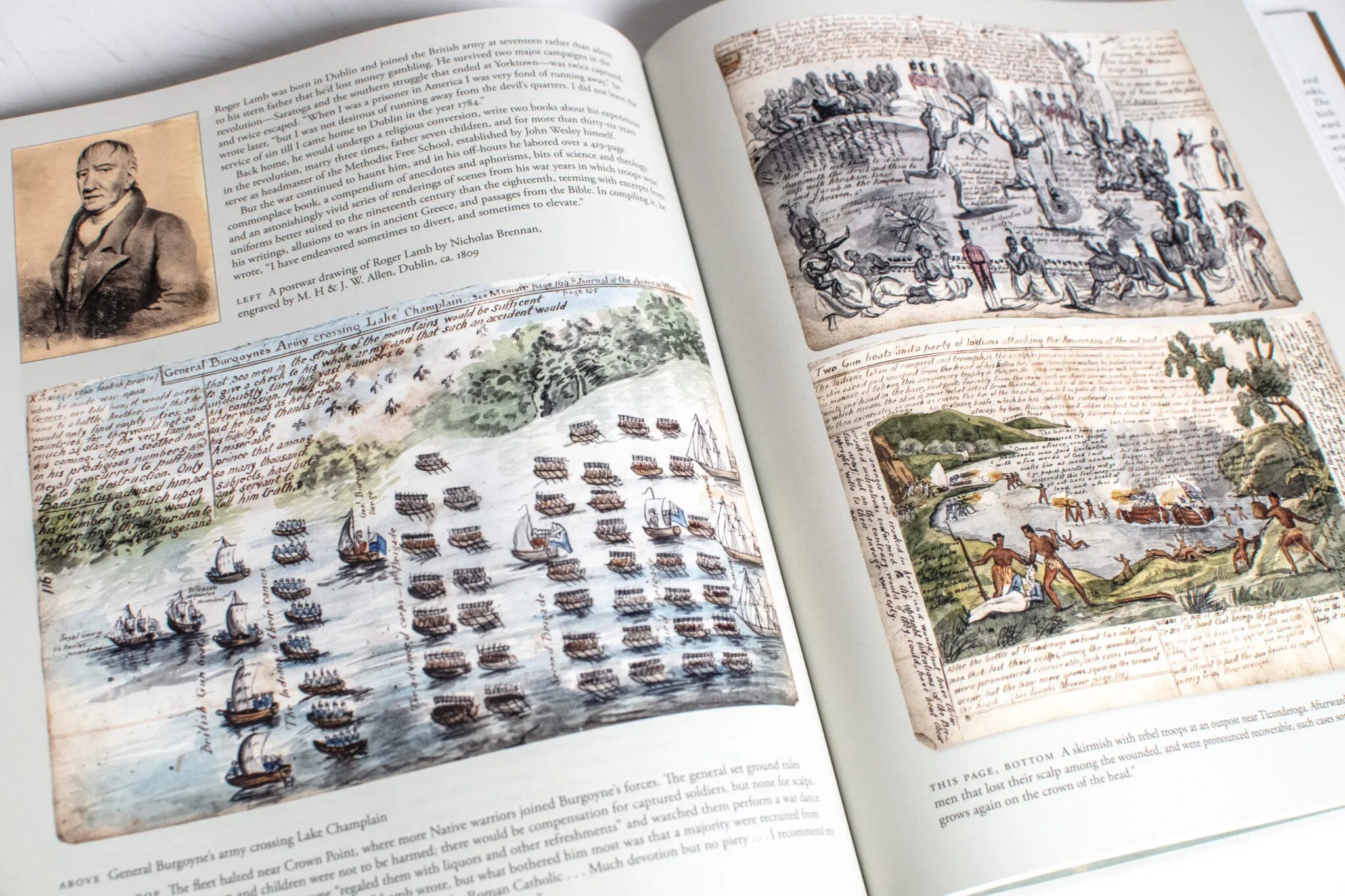
I love the detail Burns and Ward include on our burgeoning military’s tactical campaigns. Similar to Zinn, Burns favors a bottom-up perspective, highlighting the human experiences of ordinary individuals. I am excited to pull this volume out during the school year and watch my students flock to its pages.
Democracy is an unintended consequence.
Ken Burns
These books (and others) live in my classroom because American history curricula are inadequate for my needs as a teacher. I provide my students with a high-quality civic education so they grow as critical thinkers instead of memorizers of isolated facts. Standardized testing continues to deemphasize the teaching of American history. The current politicization of public schools strips historical nuance and amplifies censorship. Therefore, it is vital that we advocate for diverse literature and viewpoints. Giving students a richer, more accurate picture of historical events broadens their sense of history, our semiquincentennial country, and themselves.
Have a great week!
— Adrian
What are your favorite resources (books, videos, texts) for teaching American history?
Resources
The only reason I did not include Stamped: Racism, Antiracism, and You by Jason Reynolds and Ibram X Kendi in my above list is because Reynolds is clear:
This is NOT a history book. This is a book about the here and now.
A book to help us better understand why we are where we are.
A book about race.Teaching young people about the construct of race and how it has been (and continues to be) used to gain and keep power is challenging. In our current political climate, teachers may stray from teaching difficult topics such as slavery and racism. However, these sensitive topics must be addressed with intellectual humility. Racist ideas are woven into the fabric of this country, and the first step to building an antiracist America is acknowledging America’s racist past and present. This book shows how racist ideas started and were spread, and how they can be discredited. It is an incredible resource to have in every classroom library. You can also download a free educator guide here.
If you are looking to find out what all the fuss is over Howard Zinn and his A People’s History, and you do not have time to read his tome, I recommend you watch Howard Zinn: A People's History of the United States Documentary.
I first learned of An Indigenous Peoples’ History of the United States from the documentary, Exterminate All the Brutes on HBO. Roxanne Dunbar-Ortiz’s book is the basis for this four-part documentary. It is an intense look at the exploitative and genocidal nature of European colonialism.
I could geek out on Ken Burns content all day! This video shows filmmakers Ken Burns, Sarah Botstein, and David Schmidt discussing how they used the letters, diaries, and memories of both well-known and lesser known figures to help convey a deeper understanding of the Revolutionary War experience.
Social Justice Books of Teaching for Change
SocialJusticeBooks.org is a project of Teaching for Change, a non-profit organization whose mission is to provide teachers and parents with the tools to create schools where students learn to read, write and change the world. they identify and promote the best multicultural and social justice children’s books, as well as offer articles and book recommendations for educators. The titles on Social Justice Books are linked to Bookshop.org for purchase with their affiliate link. A portion of your book orders helps sustain their social justice work.
Howard Zinn’s Anti-Textbook by Sam Wineburg | Slate Magazine
I am a fan of Sam Wineburg. I have read Historical Thinking and Other Unnatural Acts, Why Learn History (When It’s Already on Your Phone), and have used many of the resources he created from the Stanford History Education Group (now called Digital Inquiry Group). His Reading Like a Historian: Teaching Literacy in Middle and High School History Classrooms taught me how to teach history. I agree with Wineburg’s assertion that we need more historical critical inquiry instead of passive memorization of historical fact. I do not think Zinn and Wineburg have dissimilar pedagogical practices, however. This article is an interesting read if you are familiar with Zinn’s writing and activism.
History Distorted: Sam Wineburg’s Critique of Howard Zinn by David Detmer
In this article, David Detmer, Professor of Philosophy at Purdue University Northwest, writes an extensive rebuttal to Wineburg’s criticism of Zinn. Only read this article if you are interested in a detailed analysis, including counting the number of times the words perhaps, maybe, and on the other hand appear in A People’s History.
If you want a less technical rebuttal, I offer this excellent essay from Ursula Wolfe-Rocca, a classroom teacher who uses A People’s History in her history classroom.
Ken Burns in the Classroom: Teach the American Revolution | PBS
PBS is awesome! They have curated so many FREE resources for teachers. You can search by topic, standards, or grade level. I have this site bookmarked and visit it multiple times per week.
I have no plans to make Adrian’s Newsletter a pay-to-read place. However, if you do want to (and are able), consider upgrading to PAID. Thanks!
Want more of Adrian’s Top 5? Check out a few of my archived posts.


Thomas Sowell characterizes A People’s History as “unAmerican”, historian Mary Graber’s 2019 Debunking Howard Zinn demonized Zinn as “a corrupt teacher, a fraudulent historian, and an anti-American agitator”, and historian Kyle Williams believes that A People’s History “focuses almost exclusively on victimization and tragedy.”
LOVE THESE. I had no idea your top 5 was a series. Can't wait to read more! And maybe I'll do a few. :)
I love seeing Zinn's work here. When I taught high school humanities with a colleague of mine, he had the brilliant idea of teaching the typical United States History textbook next to Zinn's. The students analyzed the two books and discussed whose story gets to be told. Back then I wish we had Hamilton, Who Lives, Who Dies, Who Tells Your Story.. I love that you are doing similar work with 5th graders.