
Spring Break Eremition
Finding Ways to Withdraw from My Teacher Brain

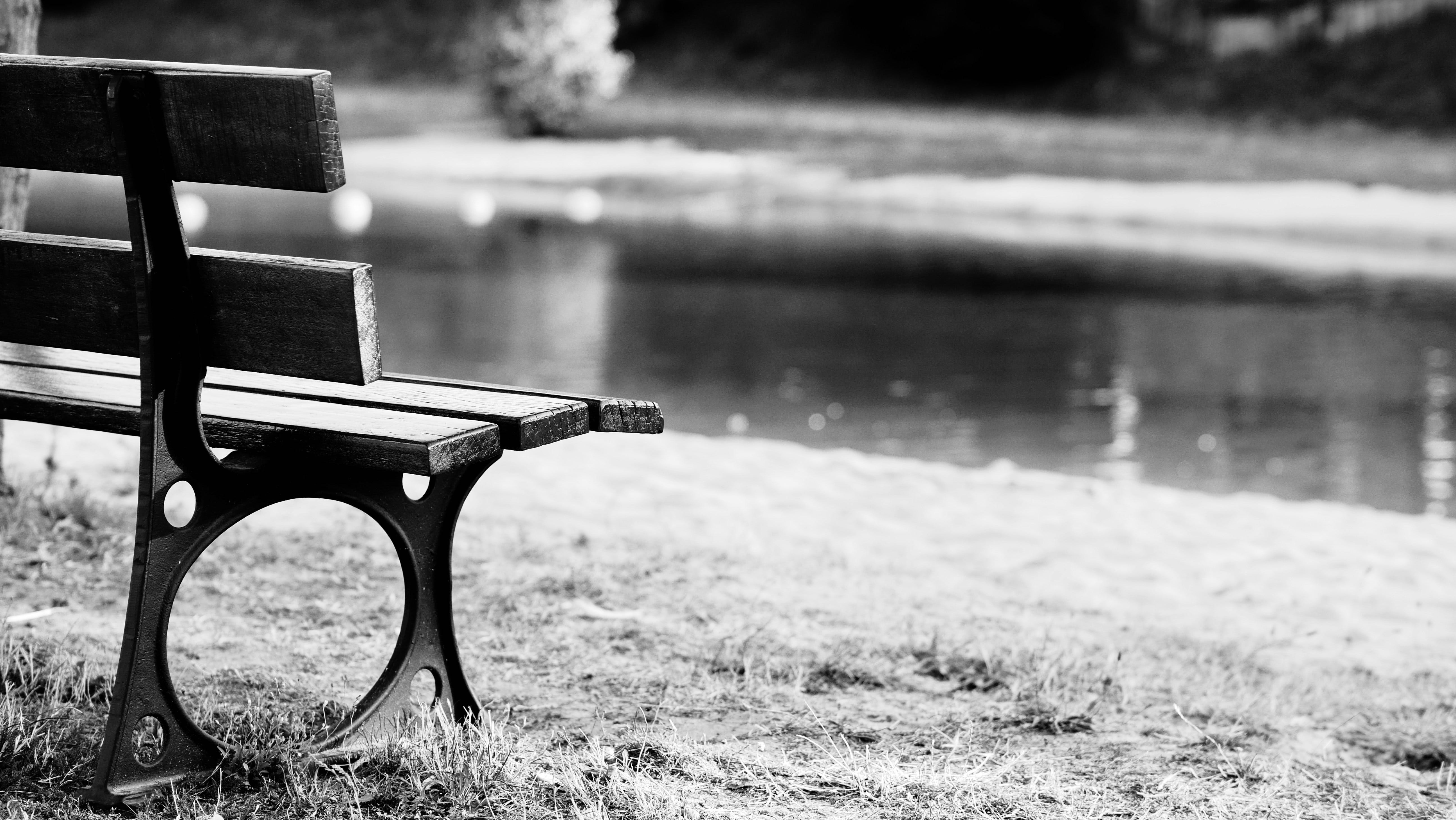
At some point in our busy lives, I believe most people fantasize about abandoning the modern world, and retreating to the great outdoors. For many, nature is just outside our windows. We see it when we open the curtains in the morning. We drive through it on our way to work. We feel it walking to and from our daily commitments. Sometimes, the natural world forces our attention. Snow storms cancel school and force us into our warmest clothes to shovel paths that access the outside world. Wildfires and hurricanes remind us that our homes can easily be destroyed.
And yet, nature continues calling, asking many of us to put down our responsibilities and spend time in quiet and solitude. For me, once the school year begins in August, I rarely hear that call. From the time the first bell rings on the first day of school, to the final dismissal on the last day, I operate on one speed. My day is measured in minutes. It is a maddening pace; a race against the clock. There never seems to be enough time. There is no slowness in public education. Teaching and learning are whirlwinds we endure until the summer. Sure, there are occasional breaks, but never long enough to fully return to ourselves. By the time we finally turn off our teacher brain, it is Sunday night, and school resumes again on Monday. When June arrives, students and teachers rejoice for an extended break, often leisurely spent outdoors. We become human again.
Public education is not the only industry that runs down their workers. There are other high-stress jobs. Those who work in healthcare, the military, and as first-responders all experience long hours, a high risk of injury, and intense job responsibilities. The difference is in how these professions are viewed by society. No one thinks that firefighters or ER nurses have easy jobs. No one denies the inherent danger involved in military infantry or being a police officer. While some are more dangerous than others, these professions are unequivocally stressful. Teaching, on the other hand, is seen as relatively easy. George Bernard Shaw famously quipped in his four-act philosophical play, Man and Superman, He who can, does. He who cannot, teaches. Shaw may have been cynically criticizing teachers for not having any specialized skills, or he might have been satirically commenting on the intellectual development required of revolutionaries for social change. Either way, Shaw’s maxim has stuck around as a quick denigration of public school teachers everywhere.
In 1986, educational psychologist, Lee S. Shulman introduced the idea of pedagogical content knowledge (in addition to content and curricular knowledge) in his paper Those Who Understand: Knowledge Growth in Teaching. Shulman deems these categories of knowledge necessary in the cognitive development of teachers. Math educator, Craig Barton summarizes Shulman’s paper concisely:
The ultimate test of understanding rests on the ability to transform one’s knowledge into teaching. This transformation requires specialized knowledge categories, particularly Pedagogical Content Knowledge (PCK), which blends subject matter and pedagogy for comprehensibility.
Teaching requires pedagogical knowledge, patience, and effective communication. These are skills developed and refined over years of teaching, learning, and reflecting on one’s pedagogical practice. Teachers become masterful professionals over time.
At the end of Shulman’s paper, he rejects George Bernard Shaw’s famous maxim for oversimplifying and disparaging the profession of teaching, invoking Aristotle’s ethos.
With Aristotle we declare that the ultimate test of understanding rests on the ability to transform one’s knowledge into teaching.
Those who can, do. Those who understand, teach.
Lee S. Shulman, Those Who Understand: Knowledge Growth in Teaching, 1986
Teachers everywhere know the difficulty of teaching effectively. Any teacher who has been in the classroom longer than five years, especially those who have taught after 2020, know that teaching is exponentially more difficult than before the pandemic. Teaching is taxing on both one’s mind and spirit. Teaching is physically and emotionally exhausting, especially in our post pandemic, technology-dependent, ever-decreasing attention spans, literacy crisis, politically polarizing times. AI is embedded in everything and deep, critical thinking seems to be fading into nostalgia. Classroom teachers are experiencing more stress, anxiety, and depression than in previous years.
Teachers can and do and keep doing until they are demoralized and burned out.
It is usually at this time of year when I begin dreaming of eremition. I daydream of living deliberately in a log cabin or staying inside my home or even moving to a cave. While I may have a inner Transcendentalist, the truth is that I am no Thoreau. I do enjoy solitude, but probably not as much as Dickinson. And I am certainly not as stoic as St. Kevin of Glendalough, sitting in his cell, arms outstretched in a cross vigil, One turned-up palm is out the window, stiff / As a crossbeam while blackbirds nest in my palm. I enjoy the company of others enough to prevent me from becoming a recluse. In reality, I could never suddenly leave my life behind as Christopher Knight did in 1986. I do enjoy camping, but I could not live alone in the woods of Maine for 27 years. Still, the constant stressors of being a teacher do have me daydreaming about monastic life.
I find the concept of eremitism fascinating. The term derives from the Greek erēmos, "wilderness, uninhabited regions," from which comes the English eremite, "solitary." There are numerous examples throughout history of deliberate seclusion from society for spiritual enlightenment. In Ancient Greece, Diogenes of Sinope embraced a minimalistic and solitary life. In Christianity, the Desert Fathers retreated into the wilderness for prayer and meditation. Society often romanticizes the recluse, whether for creative inspiration or spiritual wisdom. Seeing someone reject society, or even temporarily step away, for a simpler, less stimulating life, can be inspiring. We all want more time for self-reflection and creativity. We know that our emotional well-being is important and often sacrificed in the name of efficiency and consumerism. We can feel our attention spans atrophying every time we watch a TikTok video or doom scroll social media. Dr. Jeanine Turner, author of Being Present: Commanding Attention at Work (and at Home) by Managing Your Social Presence, explains that putting our cell phones face down does not help us be more focused. In fact, because of the “asynchronous nature of messaging, where we can have emails piling up, texts we need to respond to, we can never be fully present in a conversation.” We are constantly thinking about potential notifications running in the background. Turner calls this attentional presence: a deliberate, focused allocation of cognitive and emotional resources toward a current moment, task, or interaction, prioritizing deep engagement over distraction. Instead, we tend to operate in split situations, trying to multi-communicate in person and digitally. I see this firsthand in my classroom.
Teaching and learning are dynamic endeavors, but teaching and learning in 2026 is a new type of sensory overload. Not only am I differentiating my direct instruction, but I am battling for my students’ limited attention while quieting down the neverending clamor; all while simultaneously, trying to prevent a fight from breaking out and reminding another student to take out their supplies for the 34th time. So, whenever there is a quiet gap in the endless movement of teaching, a silence in the incessant din of the classroom, it is natural to want to lean into this tranquility. When Spring Break finally arrives, I am researching silent retreats or seclusion spas to avoid burning out.
But, even if I found an Airbnb full-scale replica of Thoreau’s Walden cabin, I would still be grappling with quieting my teacher brain. It can take me a full week before my mind and body no longer feel the frenetic grind of the school day; where I am no longer measuring my days in minutes, and I am going an entire day without looking at a clock or raising my voice. I want to withdraw from the noise of my teacher brain.
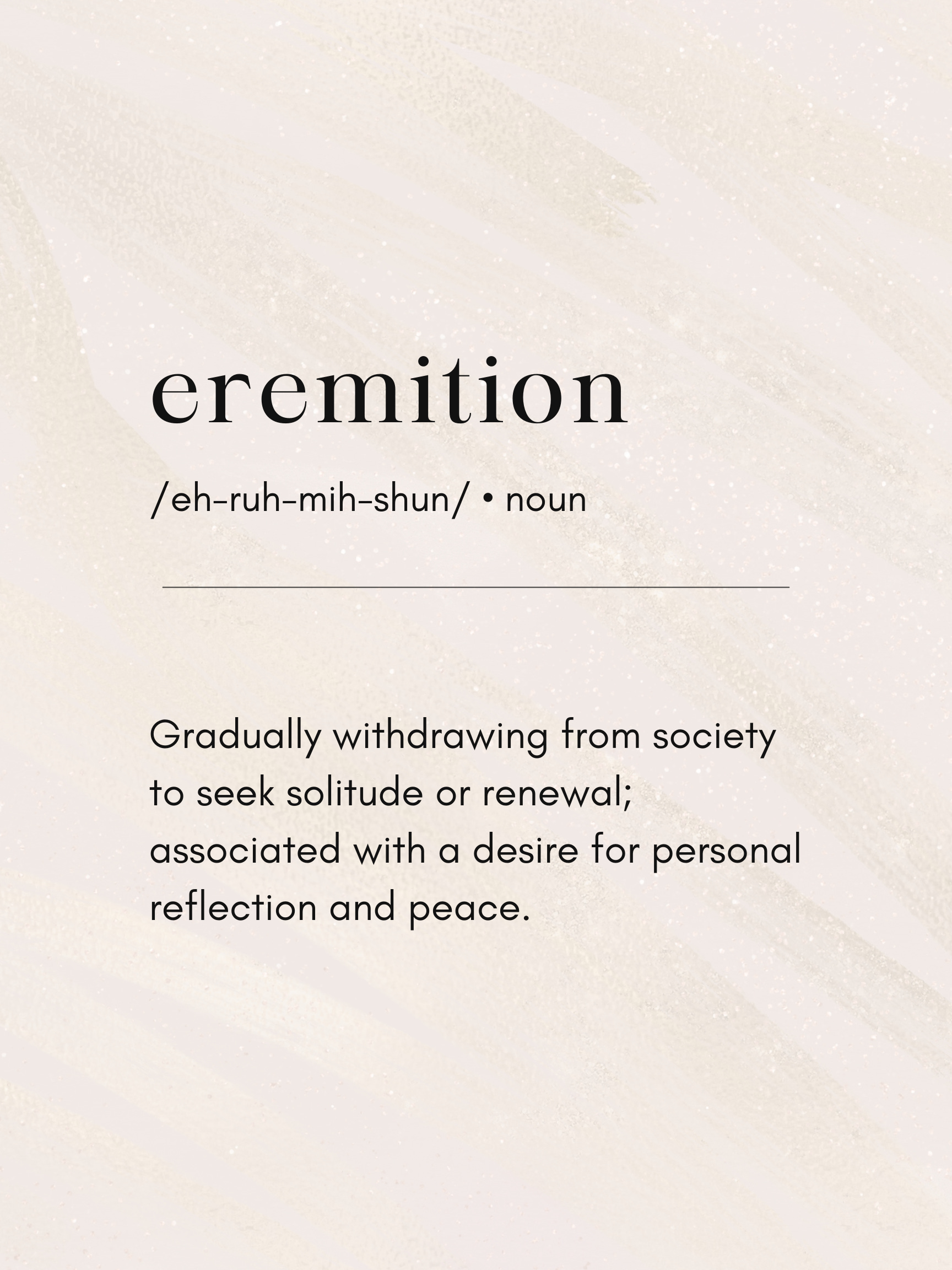
Eremition is a social media neologism1, often posted alongside an Instagram picture of a beautiful woman sitting on a sandy beach with a fancy cocktail in hand, or a solitary man sitting on a Scottish promontory overlooking a loch, or a lone camper in a dense forest. Though it has unknown origins, eremition is probably derived from the Latin erēmīta, which means “hermit” or “solitary”, which in turn comes from the ecclesiastical Greek ἐρημίτης (erēmitēs), meaning “person of the desert.” The Greek root is ἐρημία (erēmia), means “a solitude, an uninhabited region, or a waste”, which is derived from erēmos, meaning uninhabited or empty. I do not want to empty my mind. I do not want to spend Spring Break in complete solitude, though a few hours each day to read and write would be lovely. I am not a person of the desert nor forest. I am not a performative hermit. I am a teacher looking to quiet my teacher brain.
I have no tips to offer here. Since I am not an eccentric billionaire like Howard Hughes, I plan to spend this week doing things that I know bring me joy and peace. Book shopping at the beginning of the week is a lovely way to calm my nervous system. I stroll through piles of new and used books with a cup of green tea, perusing blurbs and getting lost in the shelves. Coming home with unread books to add to my TBR pile always feels like a renewal. It is optimistic to think I am going to read all of the books, but I do slowly make my way, book by book, through my endless stack.
I plan to sit in silence each day. I will probably sit looking out my office or kitchen window, watching the natural world. If I am lucky, I might get to watch it snow or rain, but most likely, I will just sit and listen to whichever spring birds have decided to return to my backyard. My family and I will hopefully go hiking. Spring weather in Colorado can be unpredictable. Hiking helps me feel poetic. Walking trails, I look for poems amongst the brush and trees and listen to the psithurism of the Gambol oaks.
If I do not get writer’s block first, I hope to write. I will cook dinners and force my teenagers to play board games. I might watch a few movies, but most importantly, I will find time to rest and do nothing for as long as possible. After Spring Break, I have nine weeks left of this school year. It will be a race to the finish, teaching while standardized testing. The pace will painfully quicken, so I best take as much time as I can this week to live slowly and intentionally. I might not have a cabin, but I can still “suck out all the marrow of life” find a “companion [as] companionable as solitude.”
Have a great week!
— Adrian
Resources
Teacher Morale in 2026: Five Takeaways | EdWeek
Noting in this EdWeek article is surprising. Teachers are experiencing more burnout due to increased student discipline, technology and distractions, worsening student apathy for teaching and learning. One piece I found interesting, though, is how more teachers are not feeling a sense of belonging in their schools or communities. I think this might be the quickest way to attrition.
Finding Rest and Recovery After a Hard Year | John Spencer
I share this resource often. John Spencer has an excellent graphic showing a continuum from tired to injured. Wherever you might place yourself on Spencer’s continuum, his blog post is even more helpful. He has so many great ideas for different approaches to take when recovering from a difficult school year.
Why This Man Spent 40 Years Alone in the Woods Collecting Weather Data
The story of Colorado’s Snow Guardian, Billy Barr, is fascinating. Barr is a former accountant who decided to live alone in a remote, off-grid cabin in Gothic, Colorado, since the 1970s. For over 50 years, he has meticulously recorded daily snow and weather data, becoming a vital source of long-term climate data for researchers and the subject of the documentary short, The Snow Guardian.
Becca Katz from her Substack, mothering Nature, offers nature-based professional development for teachers and administrators, through Good Natured Learning. Katz and her crew have a Teaching Outdoors Workshop where teachers learn how outdoor instruction supports wellness, equity, and academic success while exploring practical strategies to adapt lessons for any subject, age group, or school setting. If you have the means to bring a program like this to your school building, I highly recommend you do so. We all need more nature!
I love Seamus Heaney’s poetry. Here he is reciting his poem St Kevin and the Blackbird. It is a beautifully vivid poem that tells the story of St. Kevin of Glendalough. Here is Malcolm Guite, a wonderful English poet, Anglican priest, and academic discussing St. Kevin and the Blackbird by Seamus Heaney.
If you are looking to become an eremetic, this hunting lodge, located on Elliðaey Island, a remote, uninhabited island in the Vestmannaeyjar archipelago off the southern coast of Iceland, is perfect. The YouTuber who made the video is a bit obnoxious, but the tour of the house gives me plenty to dream about at night.
In the fall, I read The Stranger in the Woods by Michael Finkel. The story of Christopher Knight is a crazy one, and Finkel’s journalistic recounting is gripping. Knight lived in the woods for 27 years, stealing food and supplies from nearby homes. The locals nicknamed him the “North Pond Hermit.” This video is from The Atlantic and details his survival and subsequent arrest in April 2013.
This promotional video from Cornell Small Farms in upstate New York shares their five-month retreat for farm and food system educators. I have no affiliation with the program; I just really like how Project Coordinator, Violet Stone, explains the need for reflection and renewal.
Neurologist Richard Cytowic argues in this video that our attention is a finite budget of energy. Unfortunately, our modern life is engineered to exhaust it. I know that screens are bad for our brains, but hearing Dr. Cytowic explain how our brains are not designed to hold the amount of information we are exposed to, got my full attention. I can’t help but wonder what information overload is doing to my dyslexic brain and the brains of my most struggling students.
I spent far too much time trying to locate the origin, and first use of eremition.
I spent my first 27 years in education saying, "I don't know if I'll ever retire" and this year, my 28th, saying, "Can I afford to retire in June?" The burnout is intense. My break starts Thursday and I'll put aside some time to read and reflect on everything you've shared here.
I, too, am sitting here dreaming of Walden...as I enjoy my week of quiet peace.