
Accountable Freedom
Though this be madness, yet there is method in’t.


I am not a strong swimmer. I have never loved the water, nor felt completely comfortable in water. As a kid, I took swim lessons at a local recreation center. I remember the strong smell of chlorine hitting me in the face as soon as I entered the locker room. I remember the indoor swimming pool was encased in a huge bubble-domed roof. I remember being afraid to jump off the five-meter highboard1, a requirement for the class. I stood frozen at the edge of the diving platform, while the swim teacher, treading water below, called for me to jump. My dad walked up the concrete stairs, meeting me at the top. He tried to convince me to jump, but I balked. I remember him then taking my hands and holding me off the edge of the platform, my feet dangling above the pool. He dropped me into the water.2
That experience was a shock to my system, but it was the 80s, and expectations were different. Rules were non-negotiable; compliance was expected without explanation. Because I said so was my father’s favorite phrase. I may have been afraid, but I had to do it. There were no alternatives. There was no dialogue. I jump or I am dropped.
As a kid, I followed rules to avoid punishment. Whether it was from my parents or teachers, I did not want to get in trouble. I knew that if I resisted, I was going to be dropped in the swimming pool anyway, so I should suck it up and comply. My father enforced strict behavioral rules, expected full obedience, and commanded respect for his authority. I obeyed and school and at home. Strangely, though, once I became a teenager, I had a lot of freedom. My parents were classic laissez-faire caregivers. During the week, I spent many hours at friends’ houses after school. I rarely ate dinner with my family, instead hopping from dinner table to dinner table in the neighborhood. I did not have a curfew in high school. I was accountable mostly to myself. I came and went as I pleased. As long as my grades were decent, my parents never micromanaged me.
As an adult (especially a public school teacher), I have become adept at creatively questioning authority. Whenever I am given a directive that I find nonsensical, I quickly find ways to circumvent or subversively avoid compliance. And the older I get, the more absurd I find much of what is expected of teachers. I am aware of my own situational irony. I spent decades following all of the rules, checking all of the boxes, only to now question authority and teach in ways counter to the expected status quo. When I was a younger teacher, still grappling with how to take the educational theory I learned and apply it in practice, I happily received direction. I asked for advice from veteran peers and sought out wisdom from mentors. Perhaps it is because I grew up with a lot of independence that, now as a veteran teacher, I get easily annoyed with micromanaging leadership. I take being a public school teacher seriously and I want to be trusted that I will always strive to do my job well. I am a professional teacher.
One of the biggest conflicts I continue to face is how I run my classroom. I have never been good at classroom management, nor do I like the term. I have tried a number of different systems, and they always fail because they strive for submissive students. Often, my classroom resembles the “Design Classroom” from this Leewardists comic.
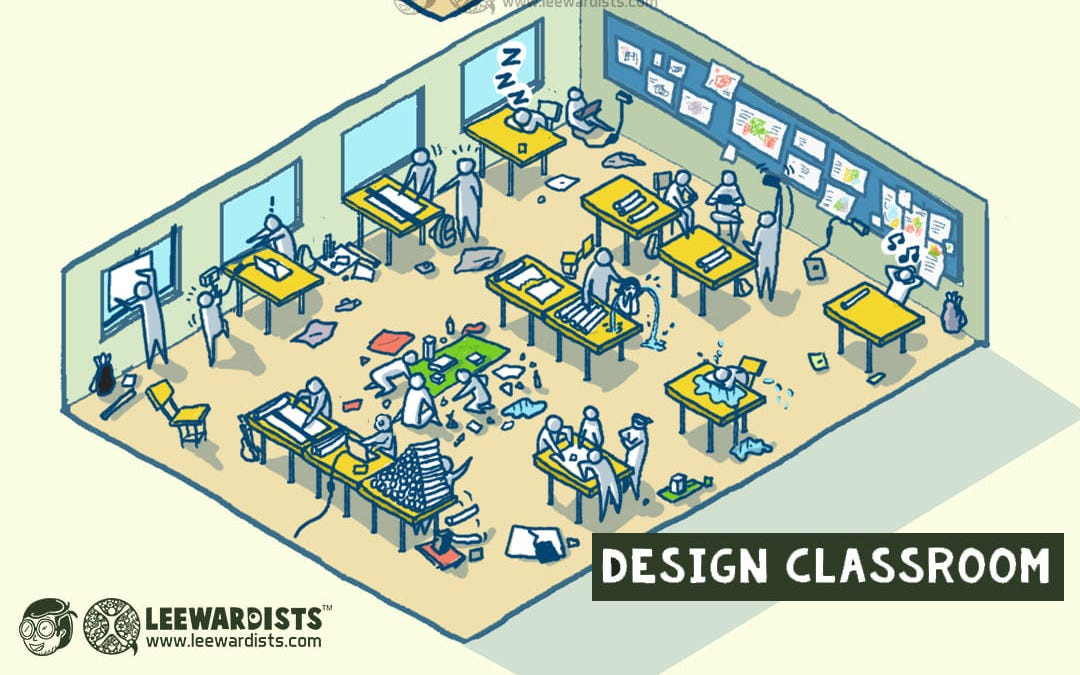
In truth, I do not want submissive students. I value student voice more than I value complete compliance (even as I am tearing my hair out trying to get students to work). My job is not to tame students, but to give them the accountable freedom I had when I was growing up. The concept of accountable freedom is made up of two elements:
Accountability - giving students multiple opportunities to exercise personal choice and judgment around what they do and how they to it.
Freedom - multiple opportunities for students to make decisions within an agreed framework that works for both my students and me as their teacher.
Freedom Within a Framework
In 2004, Neville Isdell, former CEO of Coca-Cola, was asked to return to his former company to address its stalling growth, slipping morale, and failed product launches. He co-wrote a Manifesto for Growth, implementing a new concept: freedom within a framework. Instead of coming in as an authoritarian leader who dictates all decisions, he asked leaders within Coca-Cola to make their own decisions about how to improve the company while ensuring those decisions fit within Isdell’s overall plans for Coca-Cola’s growth. Instead of giving orders, he empowered3 his leaders to believe that they are capable of making the changes necessary to revitalize Coca-Cola.
You can give support or you can not give support. But what you really have to do is make people make up their own minds to change what they’re doing. Getting people enthused to do something which they believe in, rather than giving orders.
Neville Isdell
Isdell focused as much on improving the culture of Coca-Cola as he did on it’s performance. What made Isdell a unique leader was how hard he worked to make Coca-Cola a company where employees were happy to be there. He listened to them. They felt their ideas mattered. They were challenged in their work because they knew their work was meaningful. Isdell created a “great place to work, where people are inspired to be the best they can be.” He prioritized employee well-being over profit.
In his work with leadership development, Michael E. Kossler, defines “Freedom Within a Framework” as providing employees
a context for their behavior and performance. Freedom is about believing that if you give employees the latitude to think, make decisions, and act on behalf of the (business, company, organization), they will do the right things. Framework means providing employees with a set of guidelines within which to work.
In Figure 1, Kossler bases his “Freedom Within a Framework” on two dimensions: amount of freedom and clarity of values and purpose.
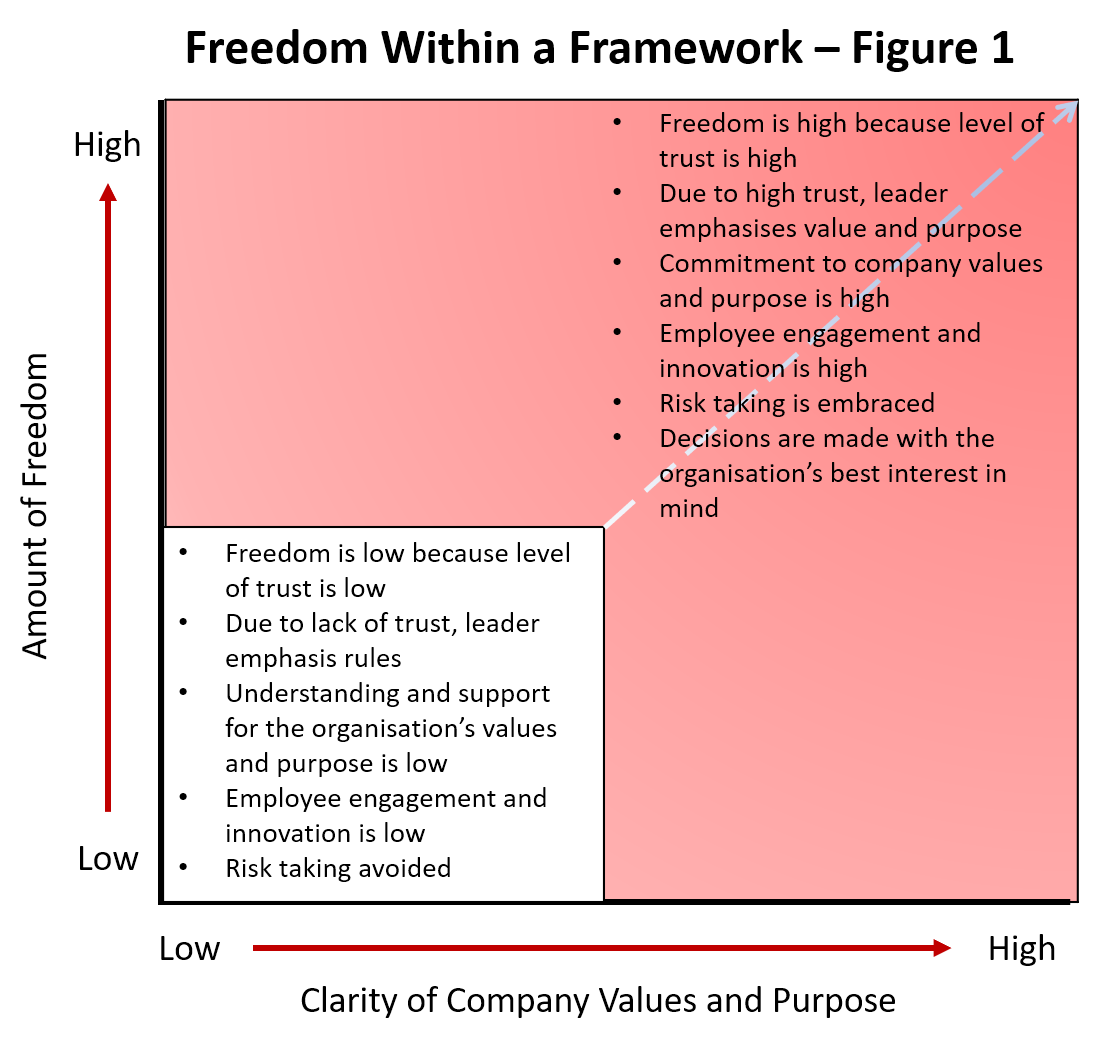
In Figure 3, Kossler includes three different levels of freedom and how they impact a company’s performance based on the clarity of a company’s values and purpose. He says, “When your organization’s values and purpose are clear, understood, and embraced, employees tend to be more engaged and willing to take responsibility because they feel committed to the results the company is trying to achieve.”

At Coca-Cola, Isdell explicitly shared his key values and told his leaders that they had the freedom to operate within those values. Too much freedom, as Kossler illustrates, leads to exaggerated risk taking and preferential decision making. Not enough freedom means employees are afraid to act at all because they do not want to fail.
In my classroom, I am constantly working to keep our learning community healthy. I work to make our classroom a place where all students feel valued, loved, and seen, while continually pushing them to grow personally and academically. I am constantly reminding students that we are a special family with a unique esprit de corps: we leave places better than we find them; we lead from wherever we are, we live a life that matters, and we love our classroom community. I promise my students that if they are engaged and work hard to grow and keep our community healthy, there are privileges.
Freedom Within Limits
Whereas Isdell and Kossler’s “Freedom Within a Framework” is used in business leadership, freedom within limits is the common term used in classroom contexts, most often associated with Montessori pedagogy. I am not a Montessori-trained educator, nor do I identify as a Montessorian. I am familiar with Maria Montessori, an Italian physician and educator, who developed her Montessori method in the early 20th century. She believed that children are naturally curious, have a natural inclination to learn, and can teach themselves, if they are provided with interesting learning stimuli. I believe that all children have innate curiosity and a willingness to learn, and this is central to my pedagogical practice.
When students first enter my classroom, after having been in strict, authoritarian classrooms for five years, many of them are shocked at the amount of freedom I give them. I do not have sticker charts, passport marks, or totaled minutes on the board for discipline. I have large, circular tables and flexible seating options. I have couches and and a coffee table and plenty of stools so that students can work in different places in our classroom. On the first day of school, I share with students a loose structure, and together, in those first weeks, we create our classroom community and shared structure based on individual needs. When students make a mistake, we address it, sometimes privately and other times, if the community is affected, as a class. Instead of cajoling my students to sit still, I give them the freedom to move around the room based on their learning needs. I balance freedom with accountability. Can I go to the restroom? Sure, just hurry back so you don’t miss instruction. Can I work at this table? Yes, as long as you stay focused and ask for help when you get stuck. My free-flowing classroom, where students are working independently or collaboratively in small groups, can become unwieldy at times. Sometimes, students lose privileges because of repeated misbehavior, but they always have opportunities to earn them back. It takes time and patience to teach students how to successfully learn within our shared freedom within limits. Students are not used to have such autonomy at school, while still being expected to intrinsically work hard so that they grow academically.
Autonomy, Mastery, and Purpose
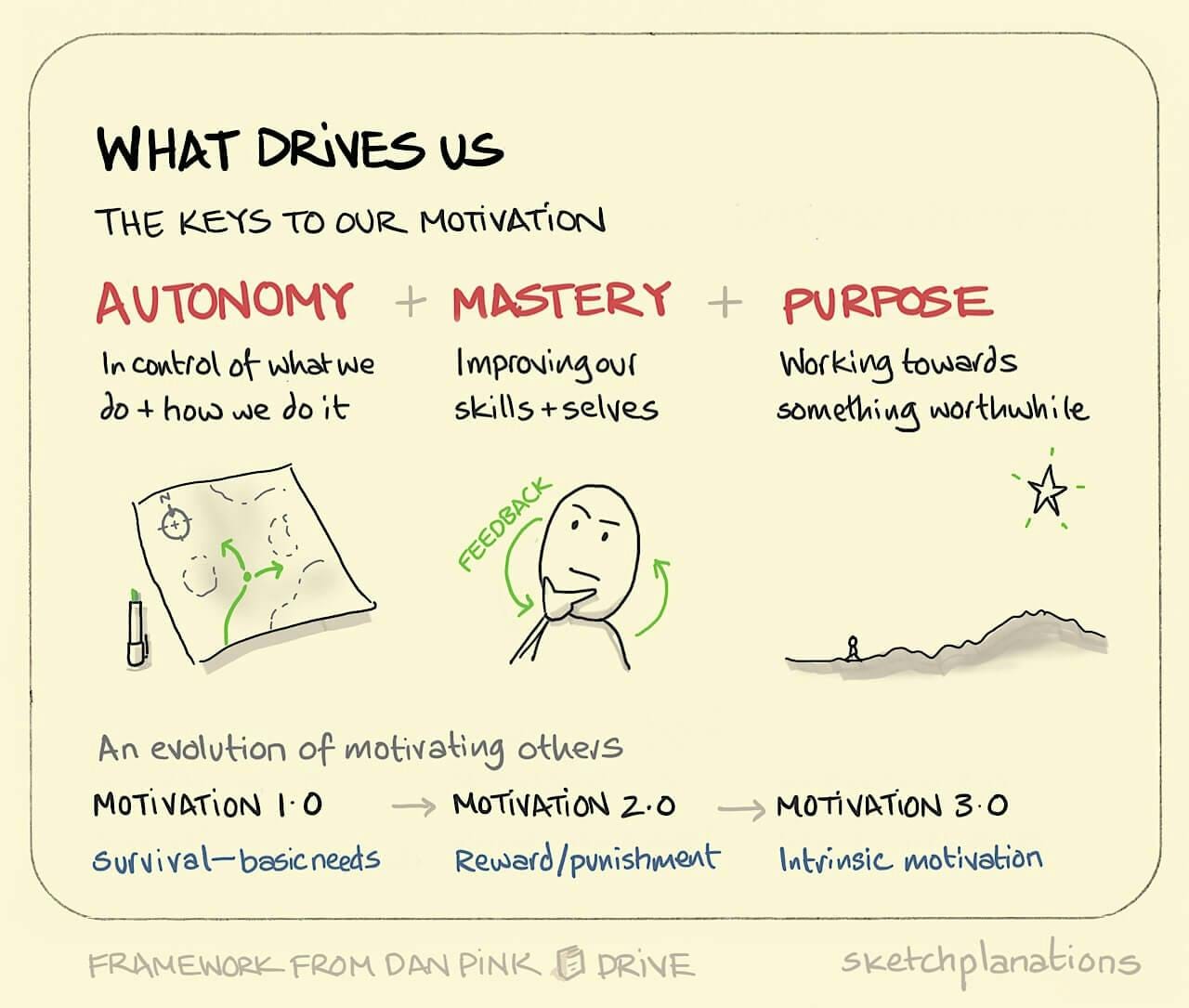
Daniel Pink’s 2009 book, Drive: The Surprising Truth About What Motivates Us, is one of my most dogeared pedagogical resources. In it, he details three intrinsic motivators that drive deeply engaging work: autonomy, mastery, and purpose. Autonomy is the chance to do things independently and in ways that matter to us. Mastery is our sense of growing confidence and competence. We learn this from feedback that tells us when we are growing. Purpose is the feeling of having a genuine impact and contributing meaningfully to something bigger than ourselves.
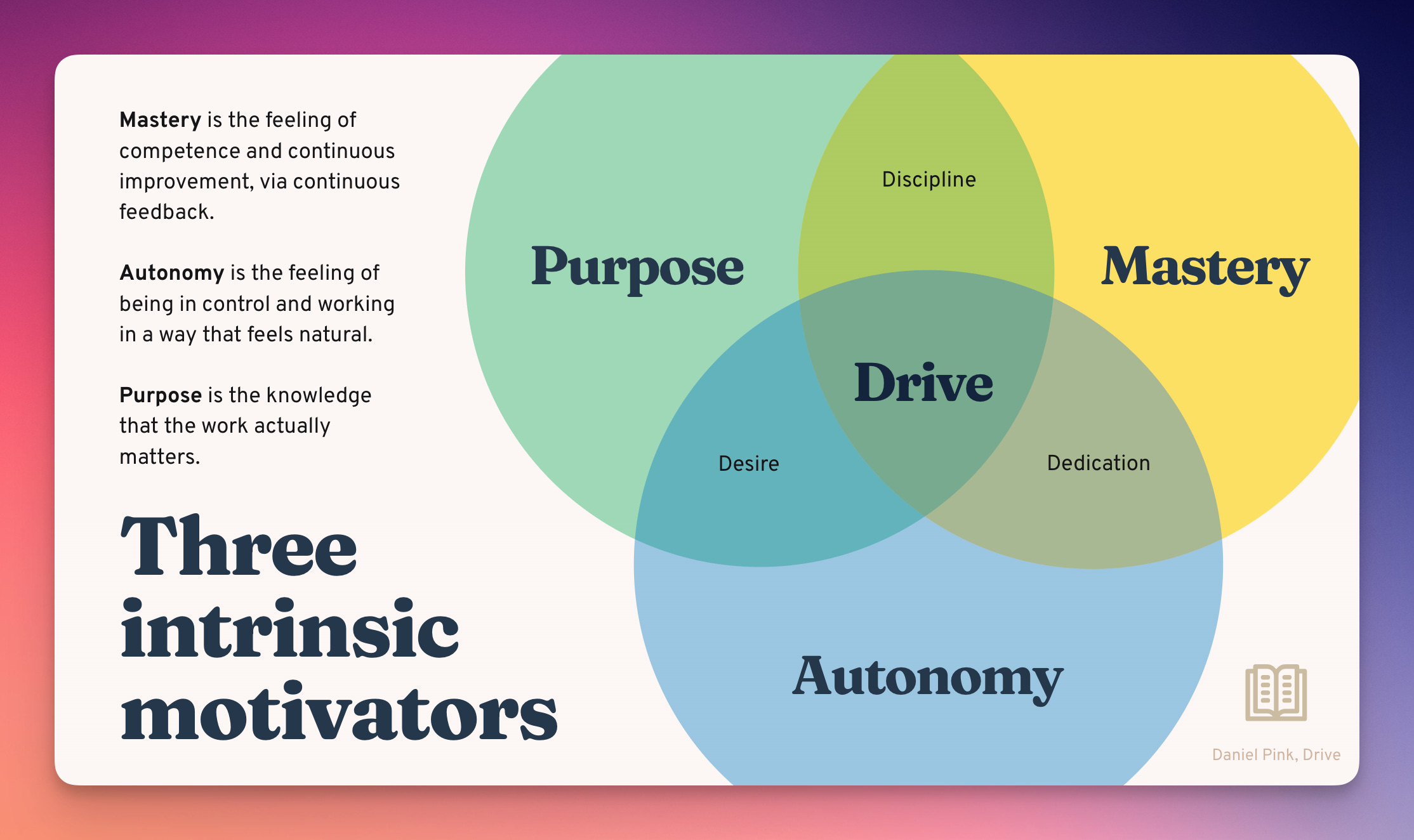
When I give my students accountable freedom, I expect they grow as a learner, and that their growth also grows the classroom community. In my sometimes chaotic classroom, students can forget how their behavior impacts the community (they are still only 10-11 years old). They sometimes lose sight of our classroom ethos. They may leave to use the restroom during direct instruction or a collaborative group project. This impacts their classmates and how they are able to contribute to the group. Students may want to get up during direct instruction and socialize with a friend, but this disrupts the entire classroom and impacts everyone’s ability to learn. I am cognizant that many of my students have atrophied intrinsic academic motivation. They come from classrooms where they had no control; compliance meant survival. Questioning authority was unsafe. I work to carefully move my students from survival mode to a place of healthier intrinsic motivation, relying on natural consequences as rewards and punishments.4 Jono Hey calls this “an evolution of motivating others.”
If I were a business leader, and my students were employees, Rajeev Peshawaria, might call me a naked autocrat because I am driven by my values and my just cause. I treat my students with compassion, humility, and respect. In Open Source Leadership, Peshawaria analyzes the leadership style of transformative leaders like Mahatma Gandhi and Nelson Mandela, noting how democratic leadership alone was not enough to bring about necessary social change. They needed to push without forcing submission. They were “autocratic about their values and purpose while being considerate, humble and respectful with their people at the same time.” This is the needle I thread as a classroom teacher. I am not an autocratic teacher, and yet I insist my students try hard, be vulnerable, and live with integrity. As an authoritative teacher, I create a learning environment where I value my students’ input. I encourage respectful feedback and pushback, but I also expect learning, collaboration, and prioritizing the needs of our peers over the wants of each individual member. This does not mean my individual students do not get what they need. I encourage students to advocate for themselves and use the community’s resources to be successful.
My students are ten-year-old children. They test boundaries and take advantage of privileges that come standard in my classroom. This is where I struggle most as a classroom teacher. My inner autocratic Gen. X wants my students to follow the rules and do as they are told. My inner democratic Elder Millennial voice encourages them to question authority and resist top-down hierarchies. And yet, this all conflicts with my Generation Alpha students who have short attention spans, struggle with being patient, are often apathetic to school. They would rather spend all day on their screens instead of reading a book. I pingpong between these two generational selves: one encourages my students’ free-range independence while the other repeats because I said so every time my students balk at engaging in their learning. My classroom management may appear chaotic, but I have reasons for what I do and how I do it.
Method in’t
Some days feel like I am slowly becoming more autocratic, forcing my students to behave, or learn, or read a book because I said so. During the second trimester of the school year, many of my students struggled behaviorally and academically. I saw a spike in fights at recess, suspensions from school, and a dramatic decrease in effort toward school. As I have always treated my students with love, compassion, and respect, it has been hard enduring recalcitrant and disrespectful behavior. This year, I was nervous for parent-conference season. I have run student-led conferences for a number of years, and each time, I feel like students rise to the occasion and have excellent conversations with me and their parents. The students who struggle, set goals for improvement. This year, spring conferences were interesting. I had some important cogenerative conversations with students and their families. Many students were fearful of explaining to their parents their report card, latest standardized test scores, and behavior remarks. There were quite a few tears as students, parents, and I discussed some hard things. I listened to each of my students as they talked through their presentation slides. Some addressed their misbehavior or lack of growth directly. I praised them for their honesty and asked how they planned to improve. Some students tried to circumvent having a vulnerable conversation with their parents. I patiently walked them through their work samples and test scores, holding them accountable for incomplete assignments or shoddy work. A few students brazenly tried to gaslight me and their parents. In these conferences, I asked students to explain inconsistencies in their self-evaluation and their school work or test scores. At the end of each conference, I reiterated my expectations and how much I care for them. I want students to go home seeing their teacher and parents on the same loving team that cares about their personal well-being and academic success.
It turns out that there is method in the madness of how I run my classroom. Accountable freedom is an ever-moving target. There are days when I am more strict because students are coming to school apathetic or aggressive, and they need to know that I am not going to lower my standards or give up on them. Other days, students are well-rested, more willing to participate, complete their work, and even interact with each other respectfully. These are the days where I am affirmed that structuring my classroom around my students’ humanity, and teaching them how to responsibly handle accountable freedom is the right way. I can only build strong, supportive relationships with my students if I start by seeing my students as children. My Gen Alpha students are children swimming in an immediate gratification infinity pool. Many come to school sleep deprived, emotionally dysregulated, and experiencing symptoms of screen-hangovers. So, while I want to give my students accountable freedom every day, there are many days when what my students need most is a classroom with a predictable structure and a loving and unwavering teacher.
I am sure that my students feel shock some days, alternating between overly permissive households and my permissive (with accountability) classroom. But what I hope is clear to anyone who steps into my classroom: I am teaching and counseling and fighting daily battles for my students’ attention because I deeply care for them. I get exasperated when students refuse to pick up any book for an entire trimester, but at conferences, I am not looking to shame my students in front of their parents. I am trying to get through to parents and students that I push and push and push because I care. I teach out of love, not fear. My academic expectations for my students are important, not so they can pass some standardized test, but because reading and writing and thinking and learning are foundational to having a good and fulfilling life.
My authoritarian, laissez-faire parents probably gave me too much freedom and not enough accountability. I would never drop my students off of a 10-meter diving platform. Yes, I grew up to be a self-sufficient and resilient adult, but I would have benefited from more love and less fear. As a teacher, I try and balance my strict values with my compassionate nature. Some colleagues argue that what my students need is a firm hand. I disagree. Walking into my classroom on any given day, there is no guarantee you will observe everyone following directions and acting with integrity. You will see students making poor choices juxtaposed with students collaborating. You might even walk in on a student mutiny! But ask any given students and they will tell you that Mr. Neibauer cares for them and has high expectations for them. Students may balk at my expectations, but I will never throw them into the pool. Nor will I endlessly coax them into making good choices for their academic well-being. Walk into my classroom and you will see an exhausted teacher lovingly fighting for his students. I assure you: there is method (and love) in the madness of my classroom.
Have a great week!
— Adrian
Resources
Give Your Employees Freedom Within a Framework | Michael E. Kossler
Here is Kossler’s entire article on his version of “Freedom Within a Framework.” Kossler uses this framework when discussing business leadership in the Open Source Era. He believes that when leaders trust their employees most will rise to the occasion on behalf of the company.
Freedom Within Limits: Why Montessori Isn’t “Anything Goes”
If you are interested in learning more about Montessori’s “Freedom Within Limits” pedagogy, this article Christian Montessori Academy is helpful. Likewise, this piece from The Suzuki School, Freedom Within Limits: The Structure of a Montessori Learning Environment is very informative.
This RSA Animate video summarizes Dan Pink’s book, Drive. If you have not read any of Daniel Pink’s books, I would recommend you start with Drive.
I have always been fascinated with the Montessori method of teaching. Maria Montessori first developed her teaching methodology working with poor students in Rome. This video segment is from a documentary, Inside Montessori. Whether you teach in a public school, charter school, private school, or homeschool, I think there are valuable insights from learning more about Montessori pedagogy.
Thom Gibson is a former classroom teacher, now a YouTuber. I appreciate how Gibson takes what Pink has learned about human motivation, and applies it to teaching and learning. This is a good video for understanding student motivation.
I usually avoid clicking on videos that sensationalize the current state of affairs for teachers and students. However, this video, Casey Simpson discusses a very real problem that I am observing first hand in my classroom. This is definitely a problem that I wish was discussed more amongst teachers and principals.
I find the psychology of different generations fascinating. This video by Psychology Simplified explains the psychology of Xennials, those born between 1976 and 1985 (or Elder Millennials, as I prefer). This “micro-generation” or “bridge-generation” is in between Gen X and Millenials. Xennials grew up analog but came of age in the digital revolution. This video breaks down the behavioral psychology, identity formation, attachment styles, resilience patterns, and socio-economic influences that shaped this transitional generation.
The rise of Fafo parenting: is this the end of gentle child rearing? | The Guardian
I recently learned the term, FAFO. Like most things in education, FAFO is a reactionary parenting style to gentle parenting. Instead of constantly swinging between one extreme and the other, I believe that what is best for children is something in the middle.
This one is just for fun! If you want to play the classic version of The Oregon Trail, just like you did on your old Apple II, check out this website.
I don’t know exactly how high this platform was. I imagine it being 10 meters, but in reality, it could have been 5 meters. Either way, I was terrified.
I definitely do not condone this methodology, and while I learned to swim, I do not enjoy it, and I am terrified of heights.
The word empower gets thrown around a lot in public education. Teachers look for ways to empower their students, whether through Project-Based Learning, self-paced classrooms, or becoming critical thinkers. I have even used the term describing how I empower my students to grow into decent human beings. The reality is that many public school classrooms are underfunded, standardized spaces where overworked teachers are desperately working to engage their students in the required curriculum so that they score well on standardized tests. Empowering students can seem like delusional thinking when many teachers are just trying to keep their students awake during direct instruction.
I am notoriously bad at offering extrinsic rewards. I do have a candy jar filled with Jolly Rancher candies, but I struggle with the donut parties or treasure chests for behaviors are just expected because they are within our classroom ethos and values. Lately, I have succumbed to bribery in a desperate attempt to get my students to read. I hate that it works.
Classroom management is one of the most difficult aspects of teaching to write about - because it is so nuanced and complex. We need to keep the classroom kind, civil, and a purposeful place for the entire community, and we need to care for every kid as an individual. Balancing the needs of the community and the individual student is so difficult. You've done a marvelous job of writing about this complexity while holding onto your own, and the students', humanity.
THIS IS GOLD