
Looking Back, Looking Forward
An end-of-year reflection

Life can only be understood backwards; but it must be lived forwards.
Søren Kierkegaard
I often joke that I only teach the fifth grade because, past the age of eleven, I have no idea how to connect with students. Perhaps I am a big kid, forever ten years old. Given my affinity with children, my original plan was to become a Kindergarten teacher (or professional clown). I feel comfortable around children; playing games, making messes, and laughing all come natural to me. As I grew into adulthood, I learned that I have an exceptional talent for soothing a crying baby and calming down a tantruming toddler. When my own children aged out of elementary school, my wife had a much easier time relating to them than I did. When they were pushing for adult independence and more responsibility, I was trying to baby them. My wife loves seeing our children grow into little adults. Meanwhile, I keep looking at photo albums, nostalgically recollecting the days when my children were little. I miss changing diapers and playing horsey. Yes, I can (and do) still comfort my teens when they are stressed or hurt, but it isn’t the same as kissing a boo-boo.
My family accuses me of being overly sentimental. The truth is that I love my children and am constantly in awe watching them navigate either high school or the Marine Corps with a maturity I lacked at their age. I do admit there is something special when my middle son roasts me with a perfectly-timed, witty remark. He has my same sense of humor and executes jokes with more talent than I do (or ever did). My oldest has a grit determination I wish I had when I was his age. My youngest daughter dances like me and is a fierce social justice warrior. I am an incredibly proud dad.
Looking back, there are a million things I wish I had done differently as a parent. I regret all the times I raised my voice in anger. I wish I had more readily acknowledged my children’s school stress, and recognized sooner my two youngest children’s dyslexia. The 19th century Danish theologian and philosopher, Søren Kierkegaard, reminds us that life’s clarity only exists retrospectively. We all have regrets, but we can only trust that we are doing our best to do the next right thing.
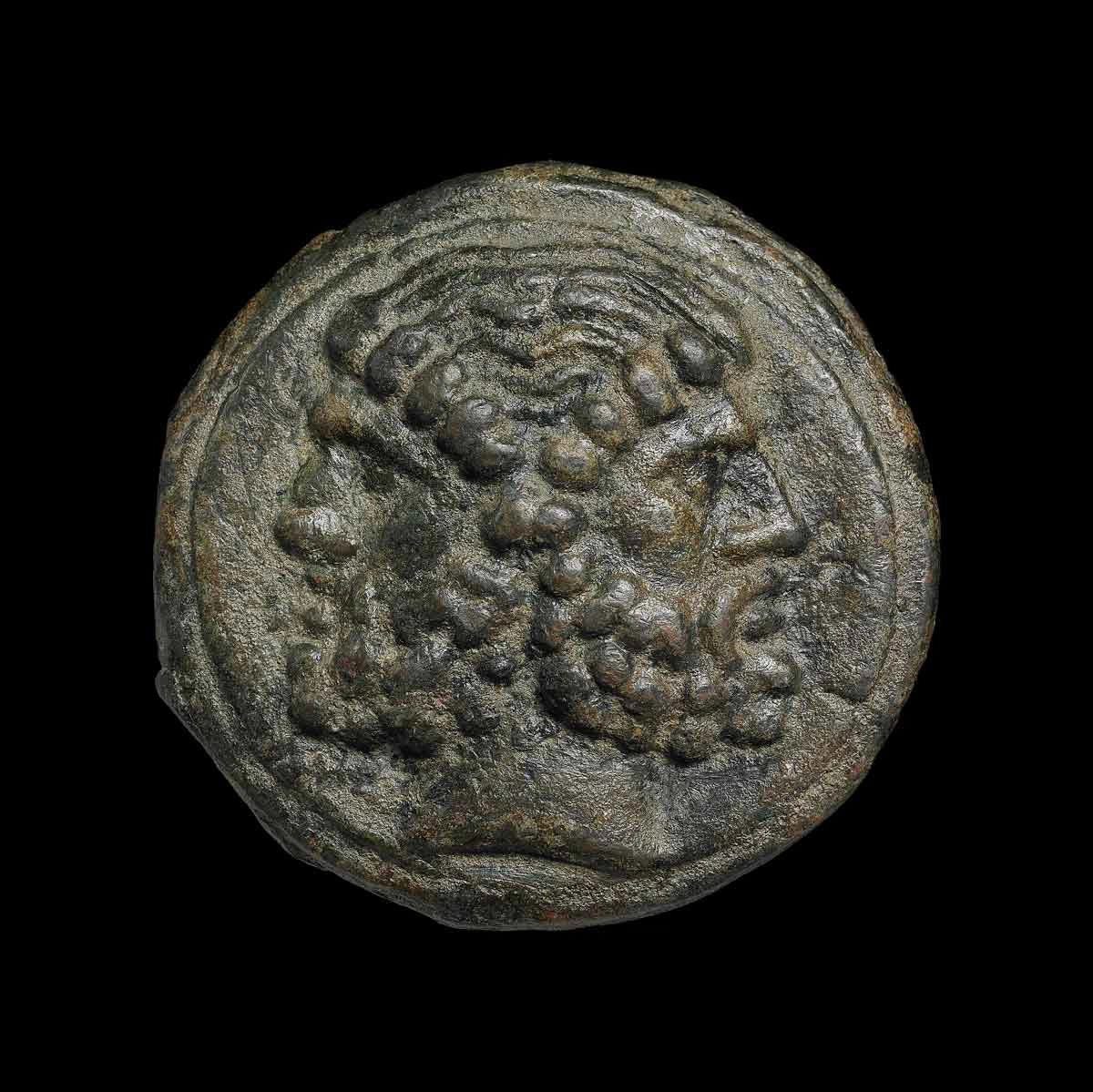
January is the season of retrospection. In 46 BC, Julius Caesar created a new Roman calendar that started the year on the first day of January (January being named for the Roman god, Janus). Celebrating the new year became a way to please Janus, the god of entrances and thresholds. With his two faces, one looking back and one looking forward, Janus is an apt symbol for the transition from the old year to a new one.
With one semester complete, it is natural to think about the new year as taking stock of one’s past and starting again. Steve Jobs famously said, “You can’t connect the dots looking forward; you can only connect them looking backward.” And so, every January, we examine our year and makes goals for the future. This makes sense. Kierkegaard’s famous quote, often abbreviated, tells us that retrospection is the key to understanding one’s life. We can only understand life after we have experienced it.
“It is really true what philosophy tells us, that life must be understood backwards. But with this, one forgets the second proposition, that it must be lived forwards. A proposition which, the more it is subjected to careful thought, the more it ends up concluding precisely that life at any given moment cannot really ever be fully understood; exactly because there is no single moment where time stops completely in order for me to take position [to do this]: going backwards.”
We are all in a grind at some point in our lives, always moving forward, rarely pausing to fully understand our life. Kierkegaard tells us that we will always have an incomplete understanding of our life because time never stops. Since we never know the future, we keep pressing on, day after day, month after month, year after year, trusting “that the dots will somehow connect in [our] future.”
You can’t connect the dots looking forward; you can only connect them looking backwards. So you have to trust that the dots will somehow connect in your future.
Steve Jobs, former CEO of Apple
We do our best to make good decisions and avoid making bad ones. Since we only get one shot at this life, we can never compare different possibilities. There are things within our control and things outside of our control. The Greek Stoic philosopher, Epictetus, calls this the dichotomy of control. He advises us to focus on energy on the things we can control, instead of wasting time on things we cannot. We cannot control what other people do; we cannot control the future; we cannot go back and change what has happened in the past. Instead, we can control how we respond.
Looking Back
2025 has been a challenging year for me. When I look back, I realize that this year has been one of profound changes, both personal and professional. At school, I have been expected to standardize my pedagogy. The required pace of instruction has increased exponentially, and the pressure to produce high standardized test scores has tightened. I have watch my agency slowly erode. At home, my eldest son graduated from high school and joined the Marine Corps. So, how do I respond to these changes?
My nostalgic, sentimental self sometimes longs for how things used to be. I recently received a heartwarming email from a former student I taught in the fourth grade in 2004. I had only been a teacher for a couple of years and was scrambling to figure out how to teach and lead a classroom full of students. I do not remember much from those early years, so I find it incredible that she not only remembers me, but says that I made an impact on her life.1 She remembers solving Wuzzles puzzles2 on the overhead projector every morning. We read Shakespeare adaptations during literacy. I read aloud and discussed Olive’s Ocean by Kevin Henkes before lunch. The novel deals with the death of a classmate and she remembers our class discussions around this sensitive topic. Olive’s Ocean was the first book she remembers actually enjoying reading and discussing in school. She remembers things I did in my classroom over 20 years ago that I had forgotten. Receiving her email warmed my heart and saddened my soul. Most of the things she remembers, the things that made an impact on her life, I am now unable to do. I have not taught Shakespeare in over ten years. Read aloud always seems to get bumped to finish our reading textbook exercises. 20 years ago, I was not thinking about trying to make an impact. The decisions I made with those fourth-graders were the best ones I could manage given my limited expertise and teaching experience. They felt like the right things to do in the moment. Reminiscing may not help me navigate the future, but I do believe that looking back does remind me of what I value and helps me better understand how I can handle the present.
I am reminded of a few lines from a country and western song by Slim Dusty, Looking Forward Looking Back.
I’ve come a long way down the track
Got a long way left to go
Making songs, from what I know
Making sense of what I’ve seen
I’ll be leaning forward, to see what’s coming
Looking forward, looking back
I have been teaching a long time, and I still have many years in the classroom ahead. My sentimental nostalgia helps me remember where I have come from and look towards the future rather than dwelling on my past. Adrienne Rich, in her eight-part poem, Turning the Wheel, calls nostalgia “amnesia turned around.” She warns us against using sentimentality to create a “false history”, by misremembering the past. Since I have been known to be overly-sentimental, I remind myself not to sugarcoat the difficulties of teaching decades ago; I am merely trying to reconcile the realities of teaching and learning in 2025 by understanding how public education has changed and what I have lost along the way. I’ll be leaning forward, to see what’s coming.
Looking Forward
I am so very grateful for the adults my children becoming. As a teacher, I will rarely know the impact I have on my students. Each day, I strive to make the best decisions I can, connecting the dots in hindsight. The aphorism, Life is not a problem to be solved, but a reality to be experienced often attributed to Kierkegaard, is apropos. I cannot solve many of the problems I am facing as a classroom teacher; most are outside of my locus of control. All I can do is experience them, reflect at the end of the day, and make the best choices I can tomorrow. Just as in parenting, I teach the best I can every day.
Saying goodbye to 2025 does not mean saying farewell to this school year. We still have six more months before summer vacation, and I have taught long enough to know that the weeks between winter break (December/January) and spring break (March) will feel arduous. Standardized testing looms on the horizon. And while I am not a avid New Year’s resolution maker, I do want to set some small goals for the rest of this school year. Receiving an email from a former student reminded me to examine the choices I have made in my almost quarter century as a teacher, and continue striving to create classrooms where everyone feels welcome, loved, and valued.
Here are a few things I resolve to do in 2026.
Destress my classroom as much as possible
I anticipate our collective stress levels will rise in the upcoming months. There will not be enough hours in the day to teach all that is required of me as a teacher. I will have to make some decisions about what learning I prioritize, and knowing that standardized test preparation and raising test scores will always be the district’s highest priority, I must plan on how I will act. I will do my best to shield my students from any unnecessary stressors that dehumanize their learning experiences. I will do my best to prepare them for middle school and deemphasize the importance of their standardized test scores, even if other adults are telling them otherwise.
Rehumanize my classroom as much as possible
For all the grief and stress teaching in 2025 has given me, I cannot forget that my students are someone else’s babies. They may be dysregulated, eat too much junk food, and stay up too late online or playing video games, but in the end, they are ten-year-old children. My job as their teacher is to guide them, academically and socially, as they navigate the fifth grade. They will make mistakes. They will break the rules and talk back. They will experience bad moods and be recalcitrant. All of these things are outside of my control. What I can control, is how I respond to each student in the moment. No matter their transgressions, my responses will be humane and kind.
Push novels
I refuse to let my students end their elementary school experience never having read and discussed an entire novel. Reading is a magical, communal experience and I will never stop fighting to make literacy a central part of my classroom. I may be limited in how I am expected to teach reading, but that does not mean I stop pushing reading whole novels on my students. This is my hill. No matter if I have to bribe them to read independently or subversively sneak a book club into my classroom, I will continue to push my students to read and talk about what they are reading.
In 20 years, what will my current students remember from Mr. Neibauer’s classroom? I doubt they will remember what we did on Day 7 of any 15-Day Challenge. I am certain they will not remember the standardized tests they took; though they may remember the anxiety and stress caused by those tests. My hope is that they remember my classroom as a place where they could be their whole selves. I hope they remember that, despite overwhelming pressure to dehumanize them, I was benevolent.
I guarantee that I will have regrets; they come with retrospective clarity. But I will keep making songs from what I know and making sense of what I’ve seen because I resolve to be the best teacher I can, year after year. That is the best part of resolutions. If I fail (which I most certainly will at some point), I can always try again next year.
Have a great week!
— Adrian
Resources
Hank Green offers some predictions for 2026. He has been doing this a long time and I am always amazed by how accurate he is.
The Holderness Family make some hilarious videos. Even if you don’t have children of your own, many of their parody music videos are relatable.
If you are interested, this video does a good job of explaining the history of Janus.
If you are interested in learning more about the philosophy of Søren Kierkegaard, this School of Life video is a great place to start.
I realize it is a bit early for convocation speeches. It has been over a decade since George Saunders gave this moving speech to Syracuse University College of Arts and Sciences, but the message is very much still relevant today. Kindness is an important theme in his short story, Tenth of December. The etymology of the word kindness comes from same root from which we get the word kin. When you are kind, you treat others as family. In his speech, Saunders admits that “what I regret most in my life are failures of kindness.” Reflecting on this past year’s struggles, I returned to Saunders’ message. I will never regret treating my students with kindness; part of our classroom family.
She is now a teacher.
Also referred to as Rebus puzzles.
Great goals! But I wish to disagree with your comment about not knowing the impact you have on your students. You won't know about all of them, of course, and you may not know for a while, but I'm confident that in future years some will reach out to you to tell you how much you mattered because that's the kind of teacher you are. I confess that some of the students who have reached out to me were a total surprise, but all of them have convinced me that my decades in the classroom were worthwhile. You will get that, too.
My husband is also missing those baby and toddler years, especially around Christmas time, and I (like your wife) love this preteen stage they are in. Mine are a little younger than yours, but it's so fun to see them become their own people.
How lucky we are, to be parents :)